
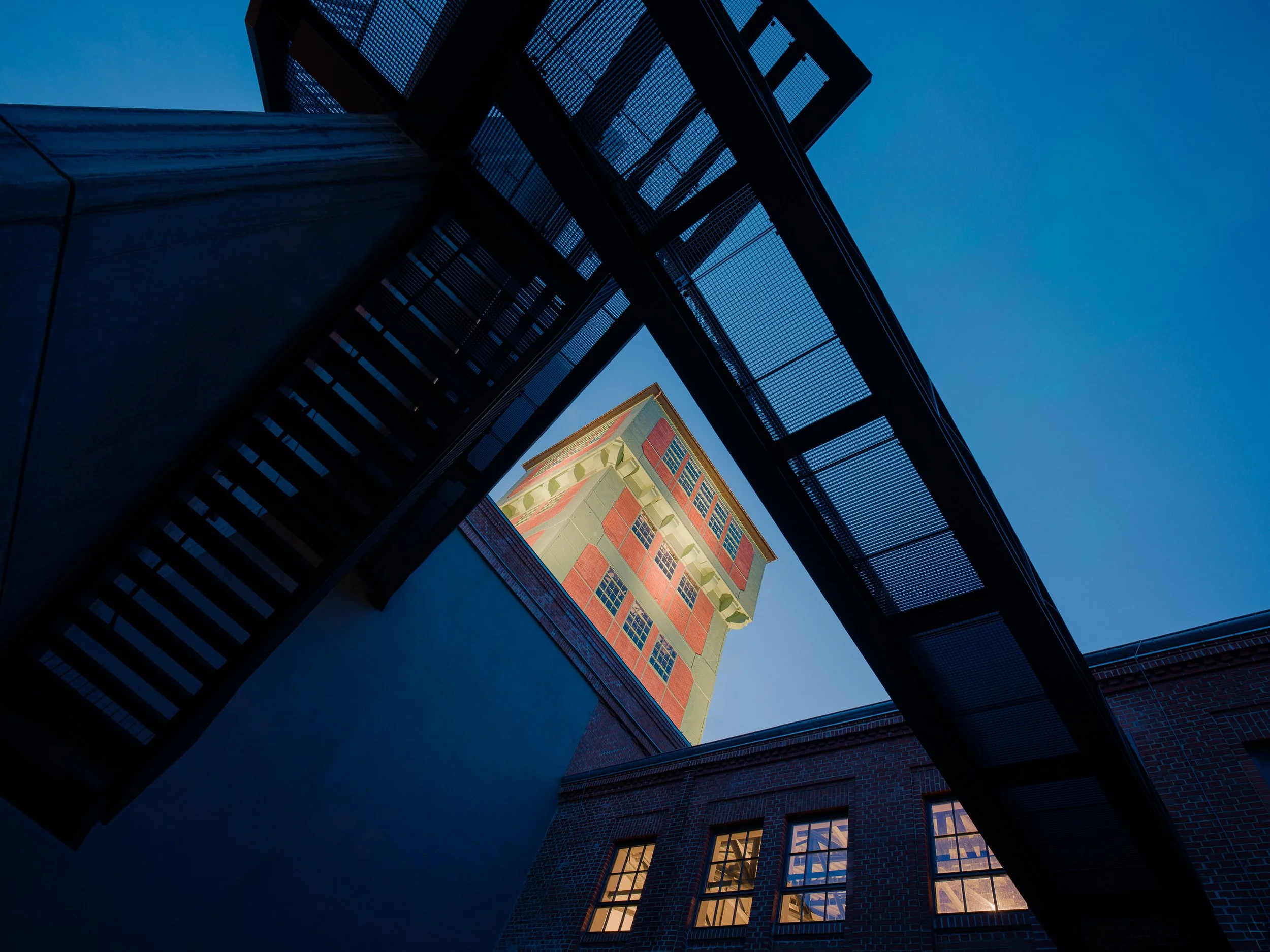
Coal World Oelsnitz/Ore Mountains
Location: Oelsnitz, Ore Mountains, Germany | Architect: IPROconsult | Completion: 2025
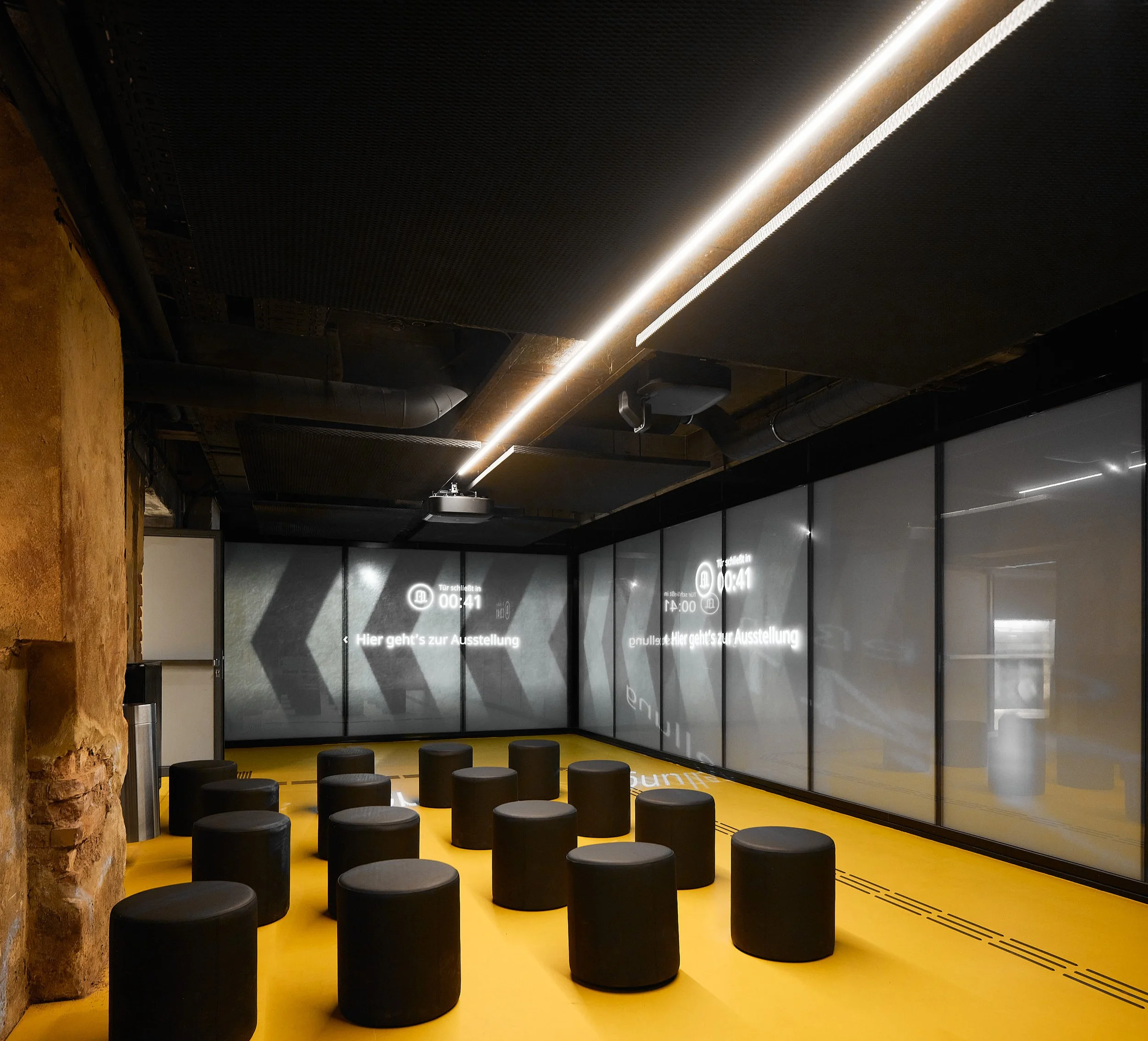
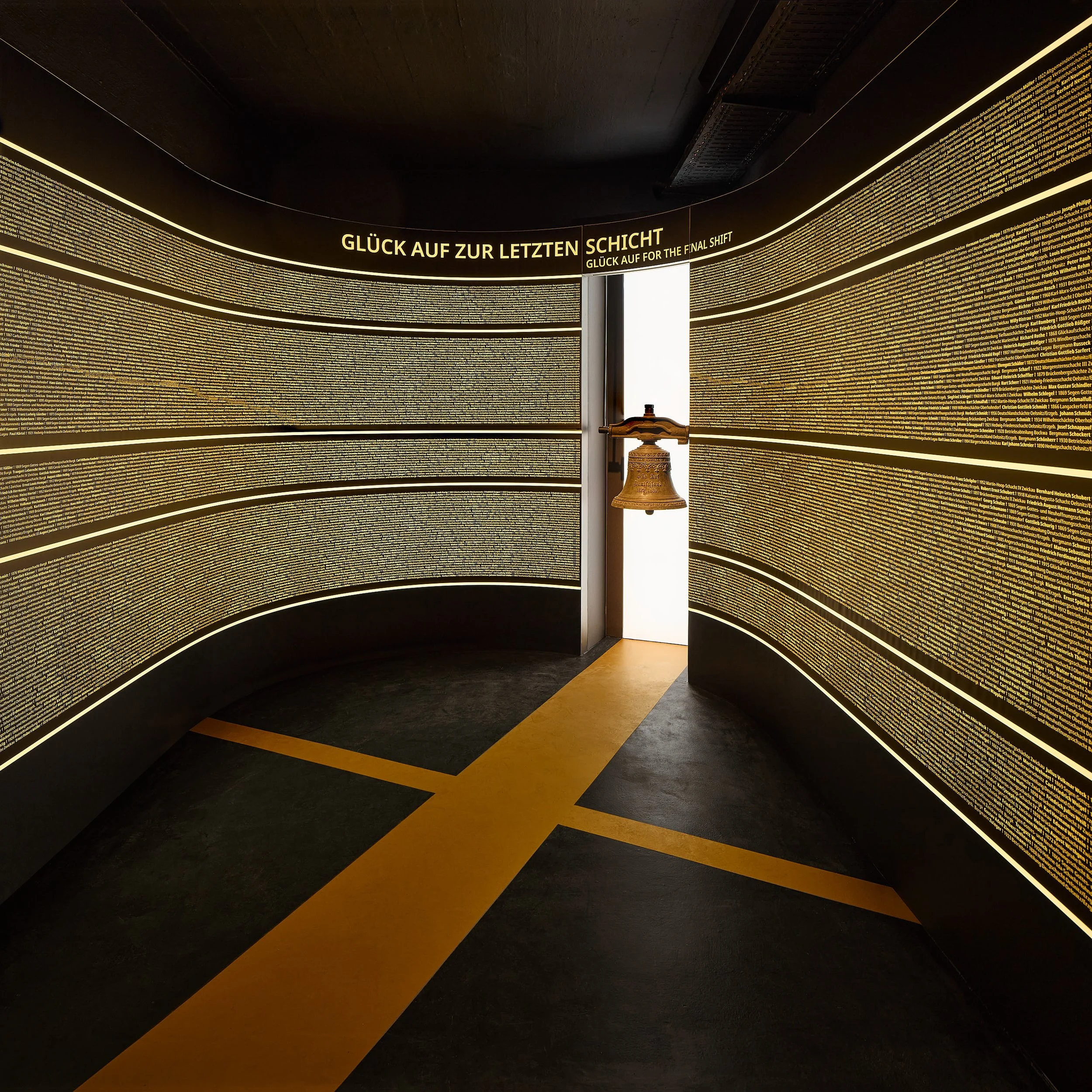
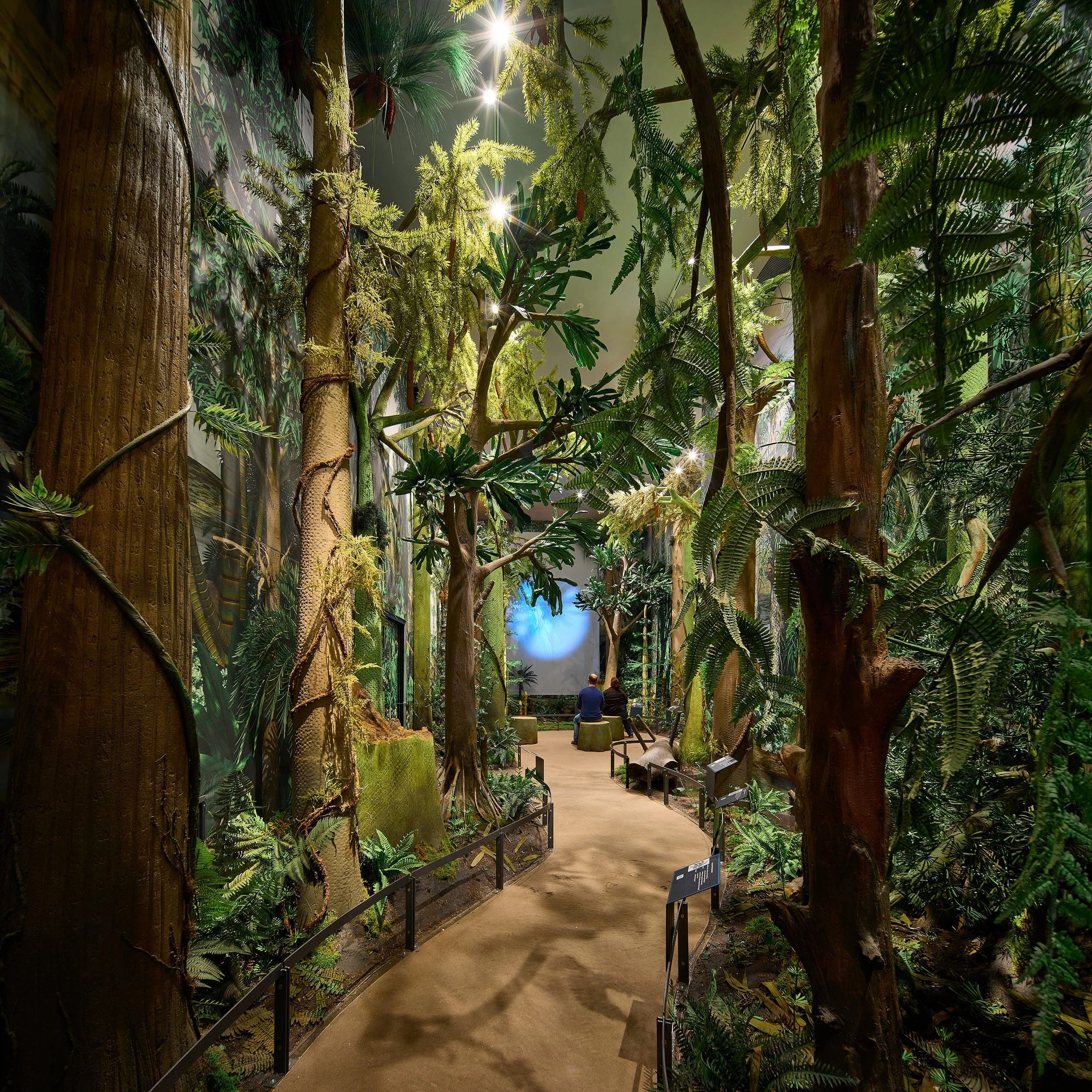
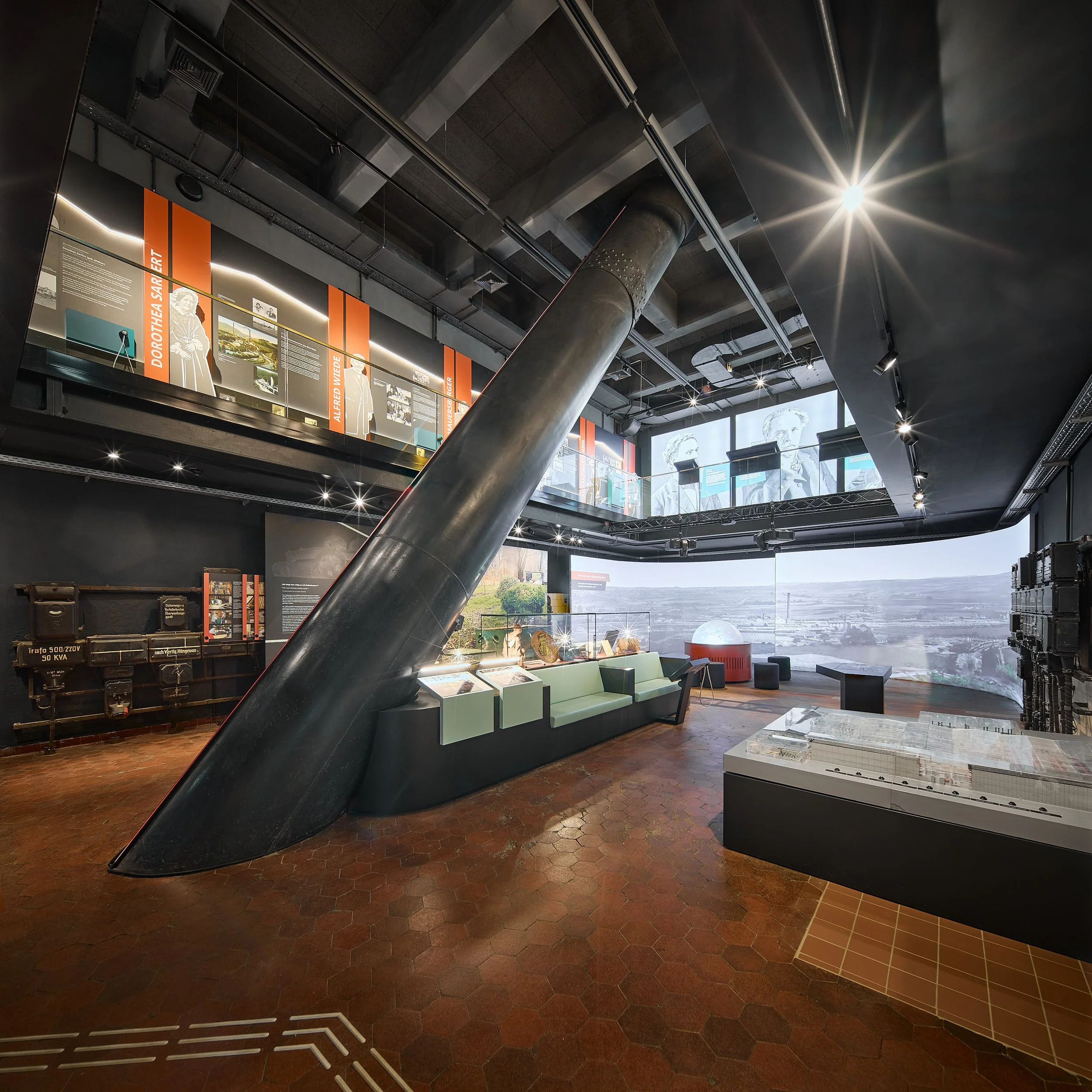
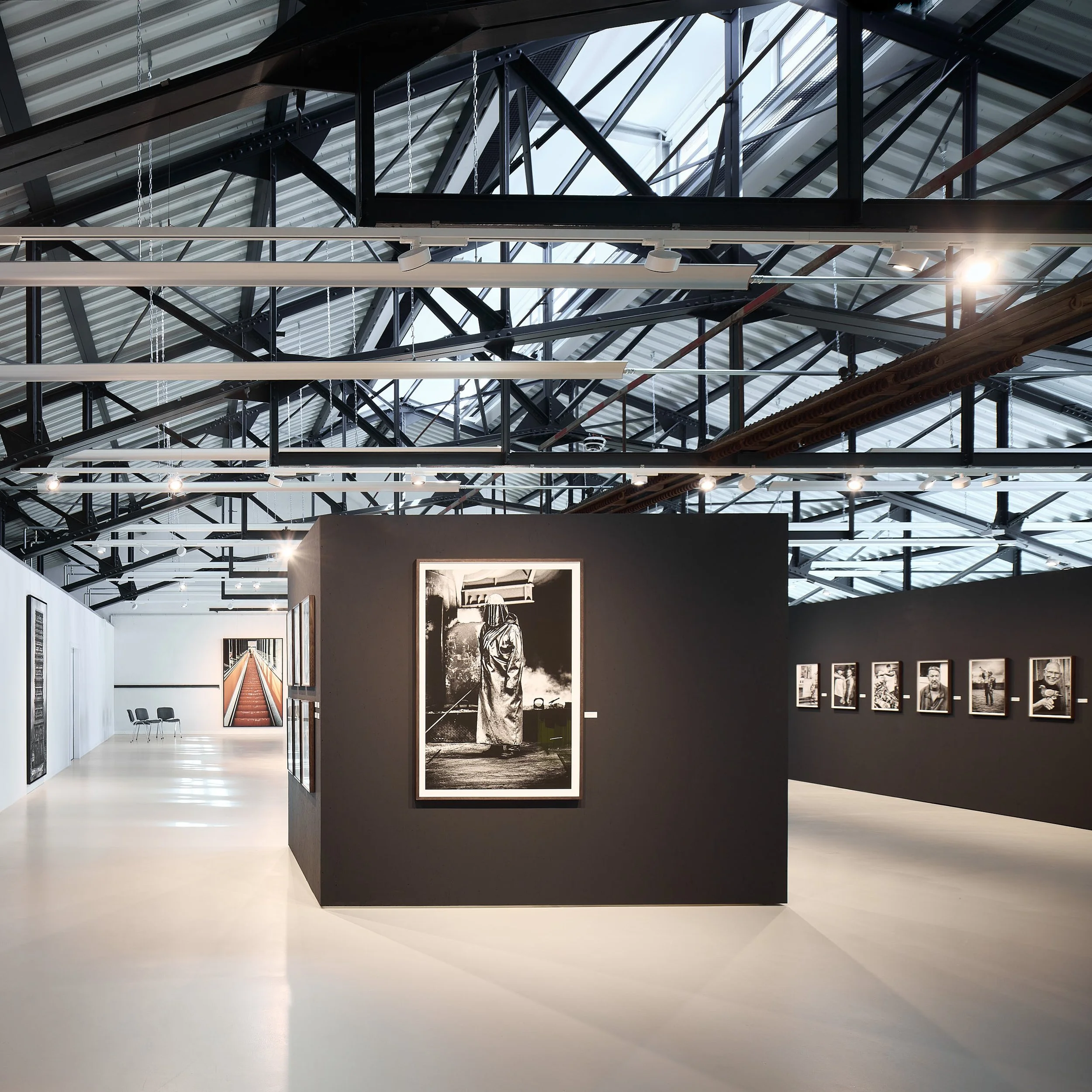
With the KohleWelt Oelsnitz/Erzgebirge , a museum has been created that combines industrial history with contemporary architecture. The former Oelsnitz coal mine is one of the most significant examples of Saxon industrial culture. Today, this site is being brought to life through a modern exhibition and a sensitive architectural transformation. For the general planner IPROconsult , I was commissioned to create the photographic project documentation of this special transformation. The aim of the photo series was to visualize the spatial dynamics of the new exhibition, the materiality of the building, and the connection between historical substance and modern design. Museum projects in particular create a unique tension: here, architecture serves not only as space but as a stage for content, stories, and visitor flows. The photographic task is to bring these layers together in a clear visual language.
Architectural Concept of KohleWelten
The KohleWelt Oelsnitz/Erzgebirge is an extraordinary museum project that took several years to complete, combining historic industrial buildings with modern architecture and contemporary museum education. The renovation of the mine buildings and the construction of new connecting structures were commissioned by the Erzgebirgskreis District Office. The project was based on a concept developed by KEM Kommunalentwicklung Mitteldeutschland, which was involved in the subsequent planning process as a subcontractor to IPROconsult. Under the leadership of Michael Kroll, KEM took on significant portions of the project planning. The project was planned in close collaboration between both partners. Together with other experts—such as the engineering firm Dr. Holger Stoß for structural engineering and the agency Ö-Konzept from Zwickau for the exhibition concept—a holistic renovation process was developed in accordance with heritage preservation and museum guidelines. The planning encompassed both the restoration of the existing shaft buildings in accordance with preservation guidelines and the integration of new structures for access, infrastructure, and exhibition design. The goal was to preserve the historic fabric as authentically as possible while simultaneously creating new spatial perspectives for visitors. 
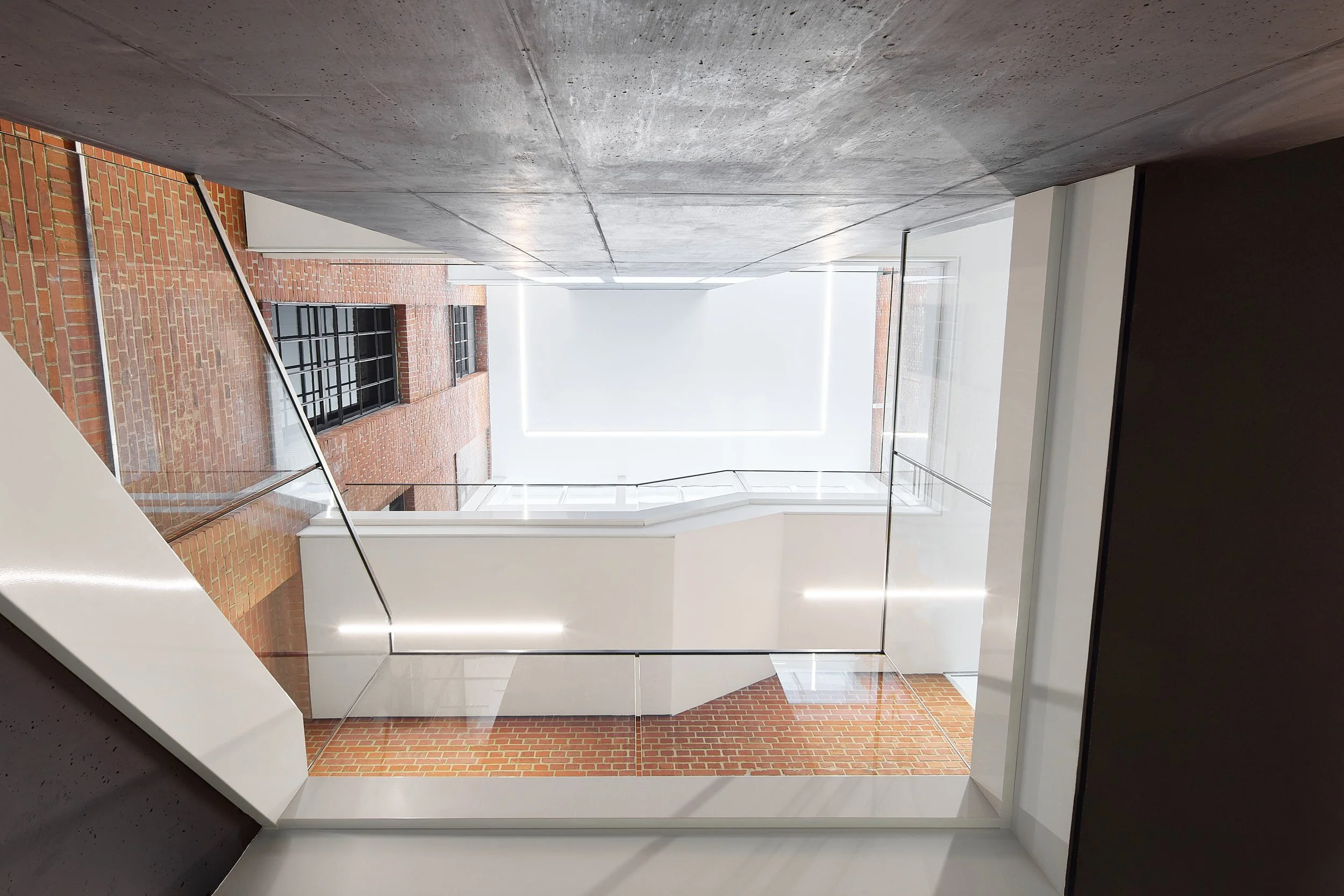
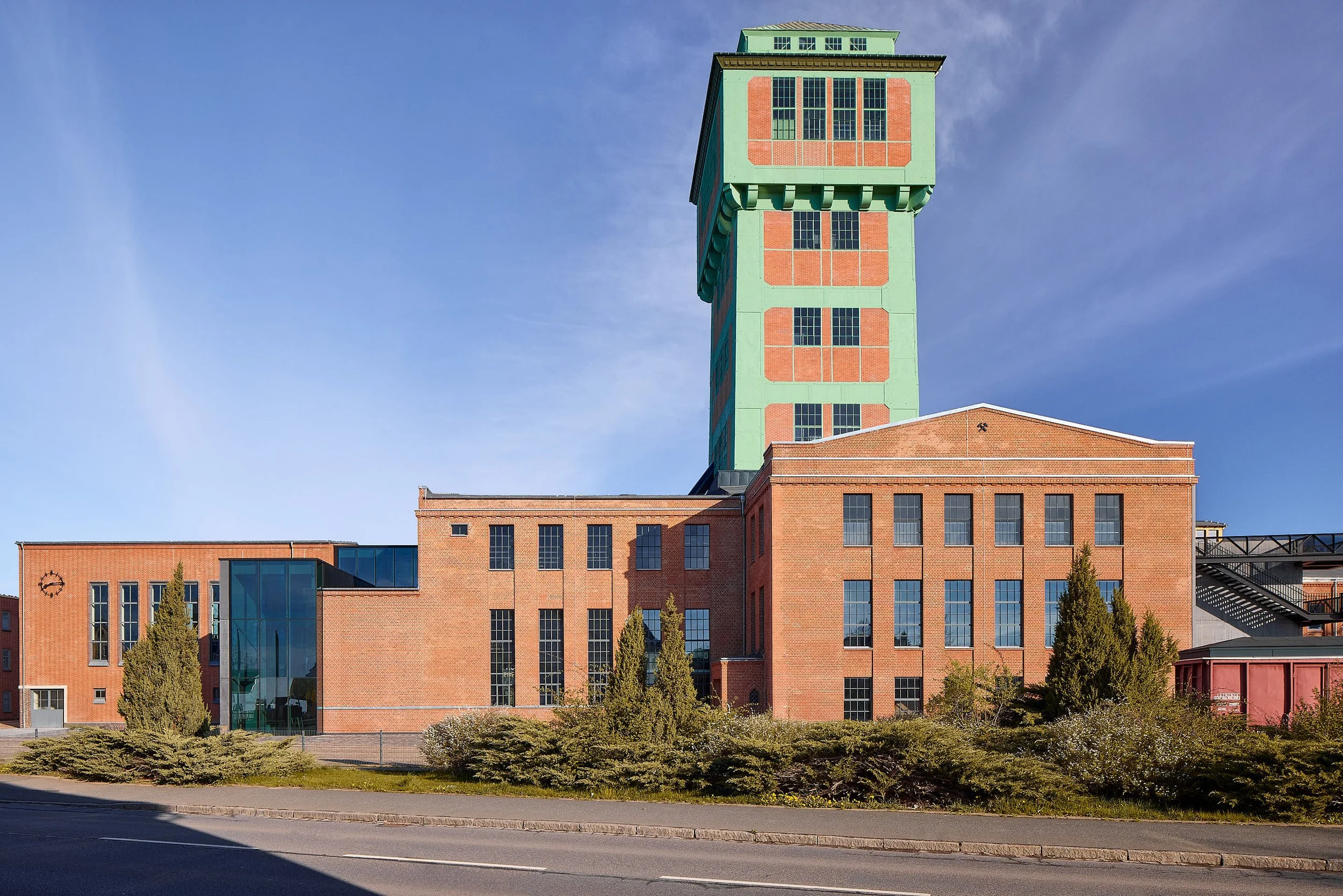
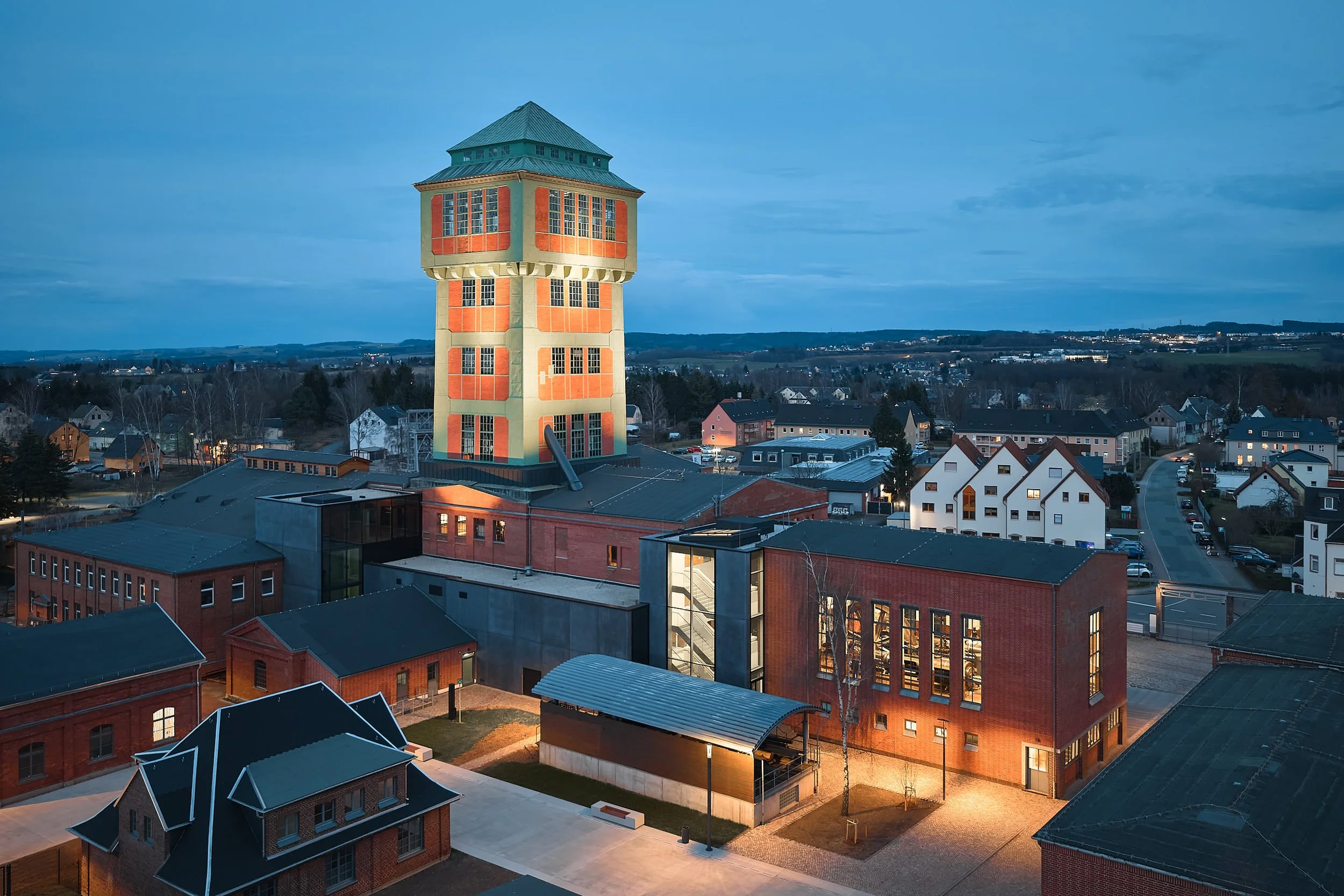
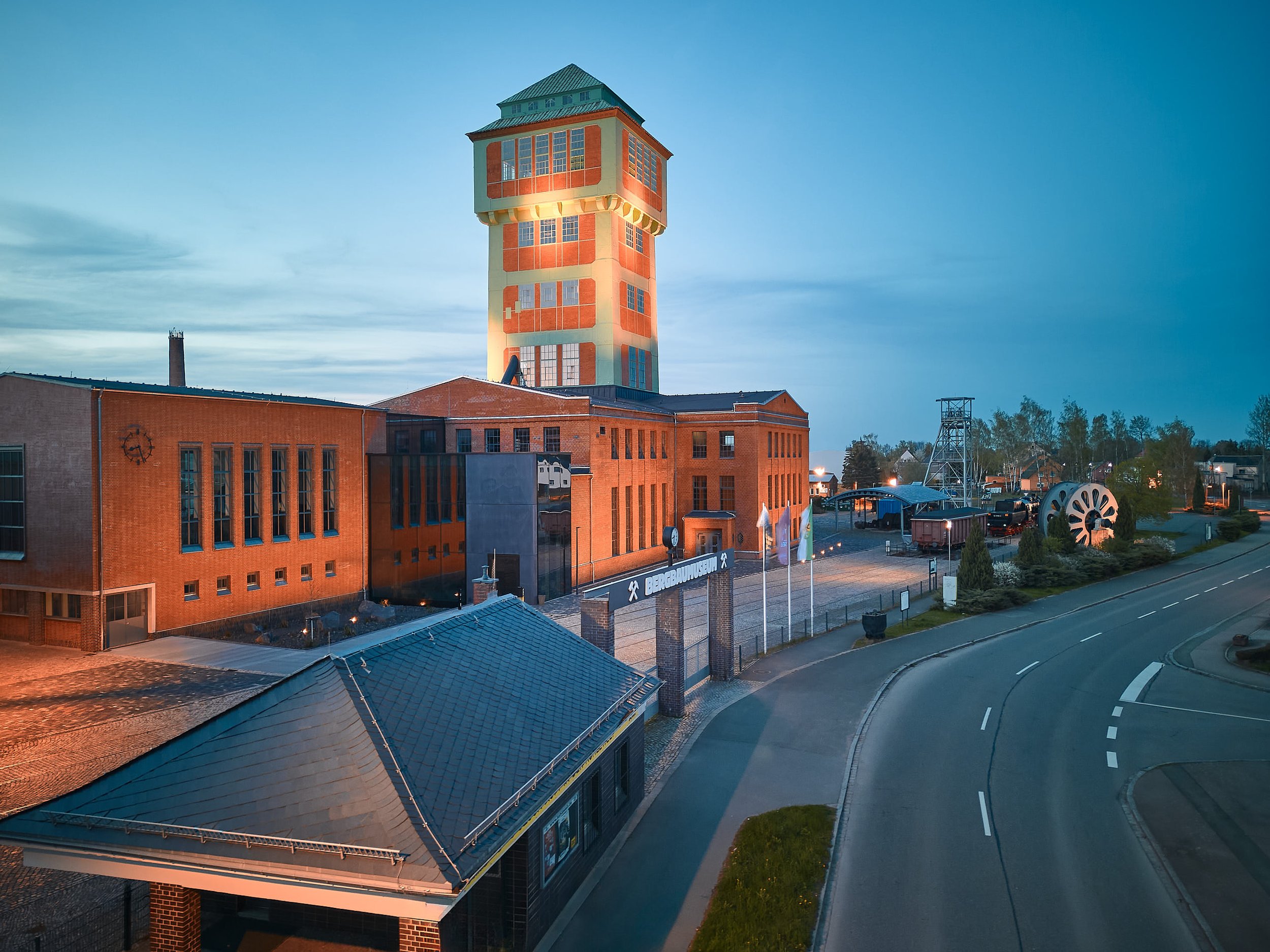
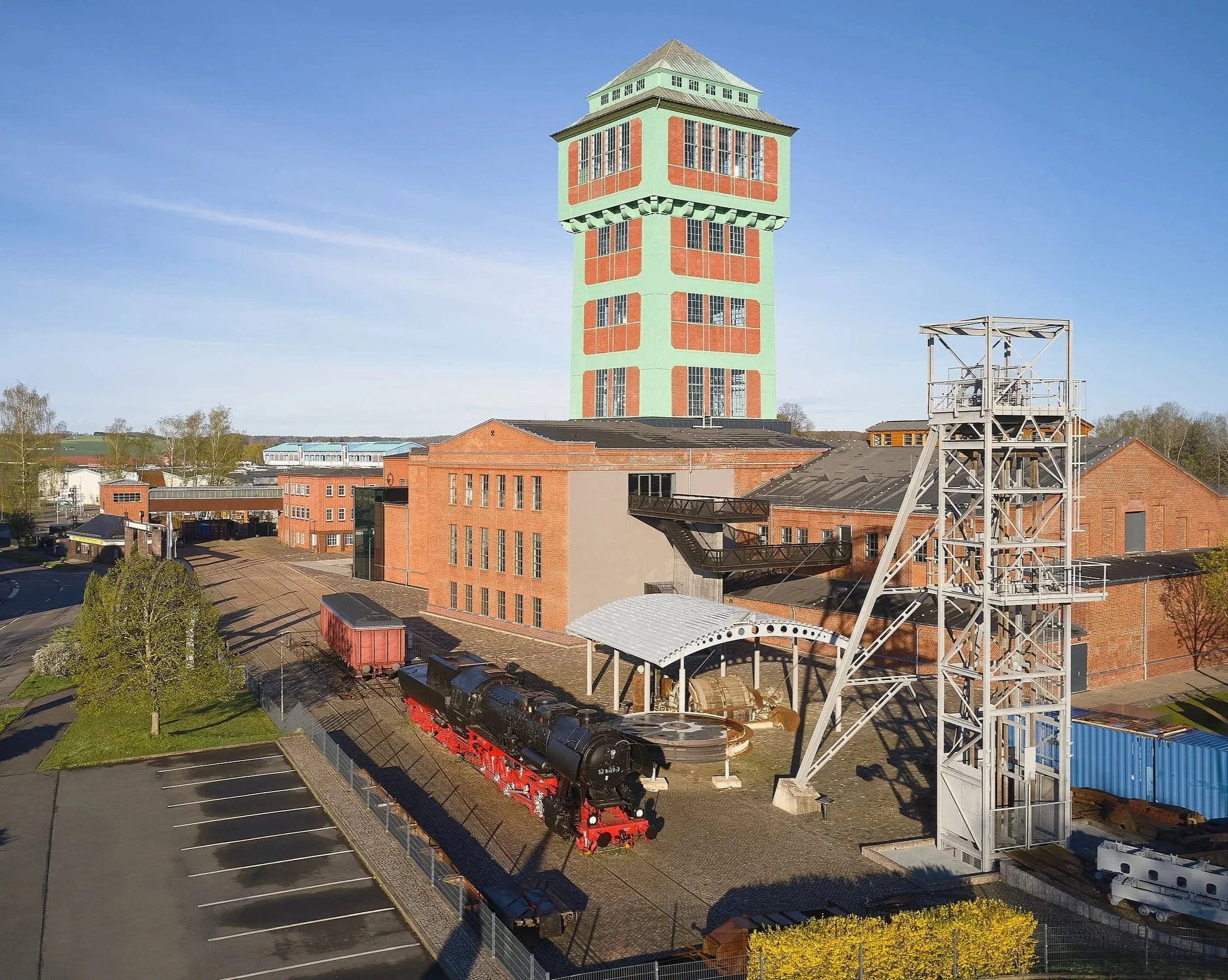
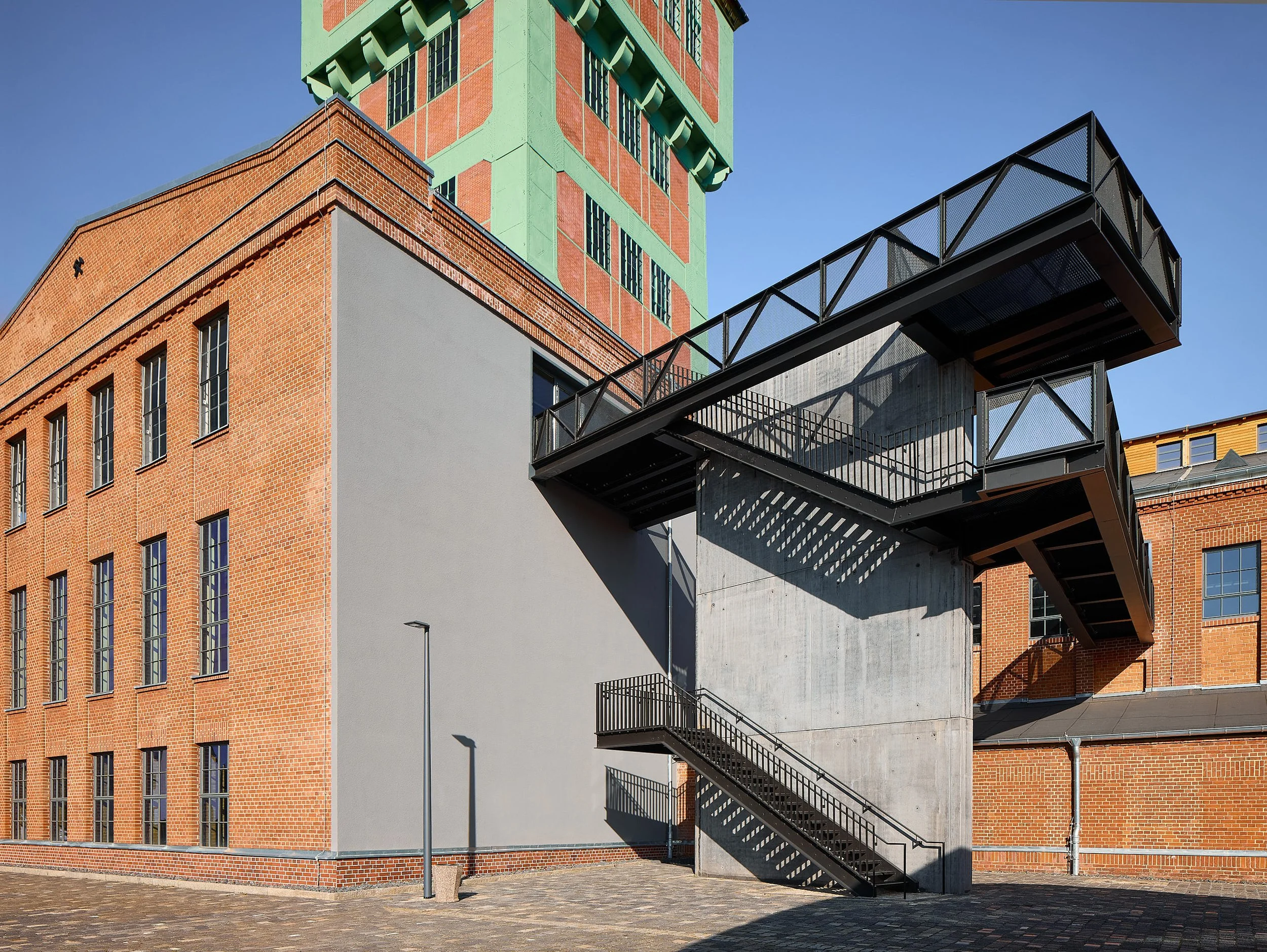
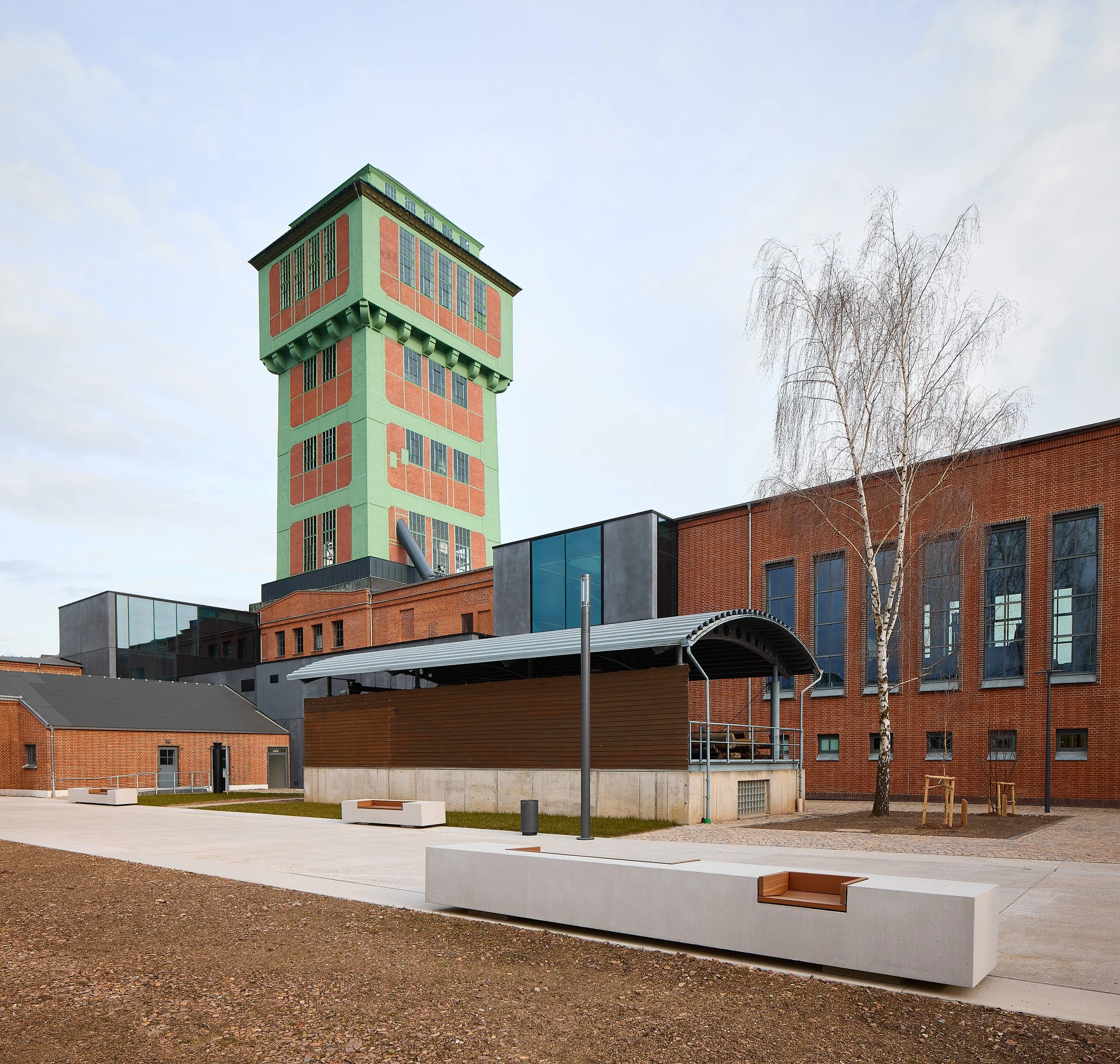
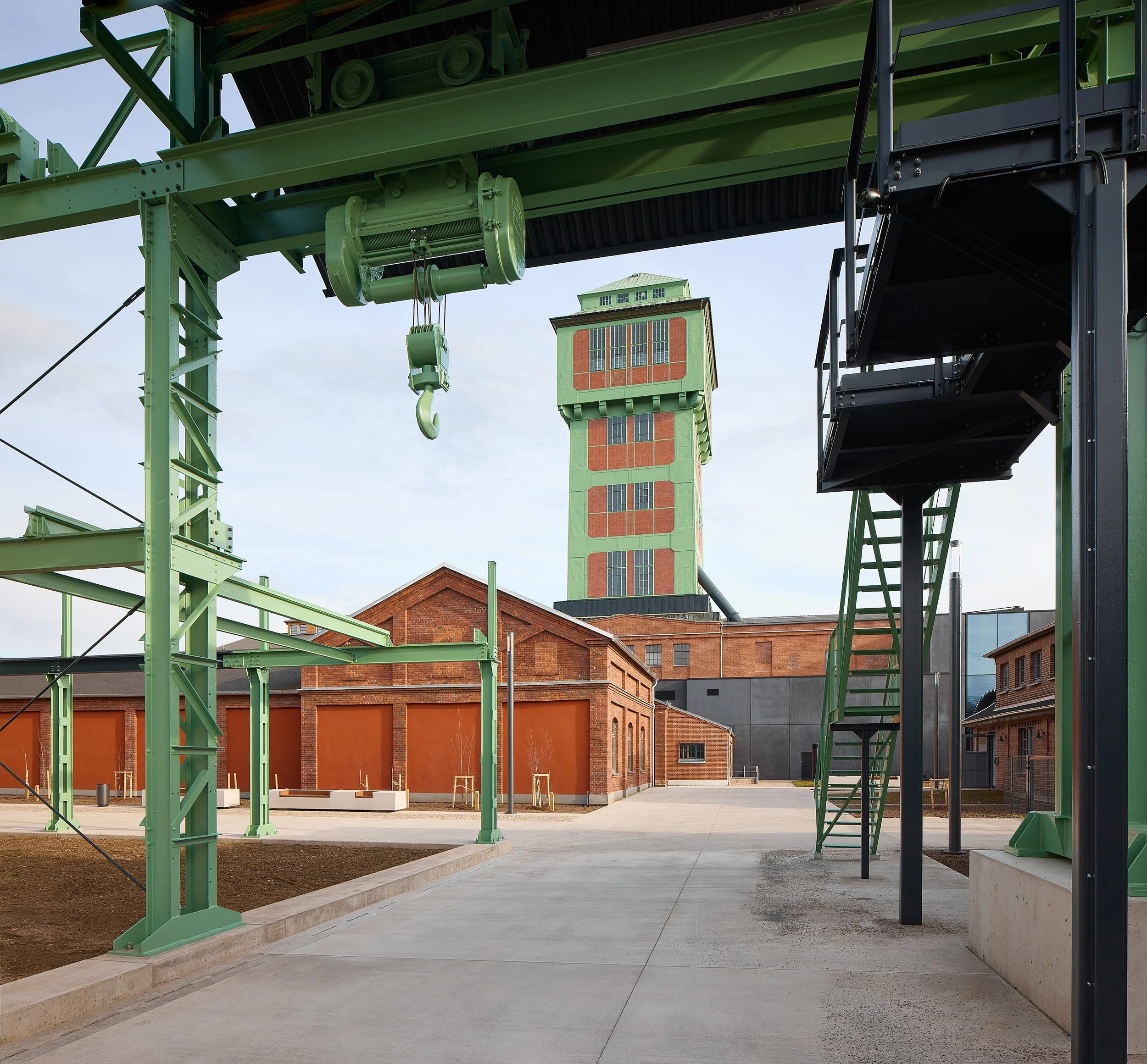
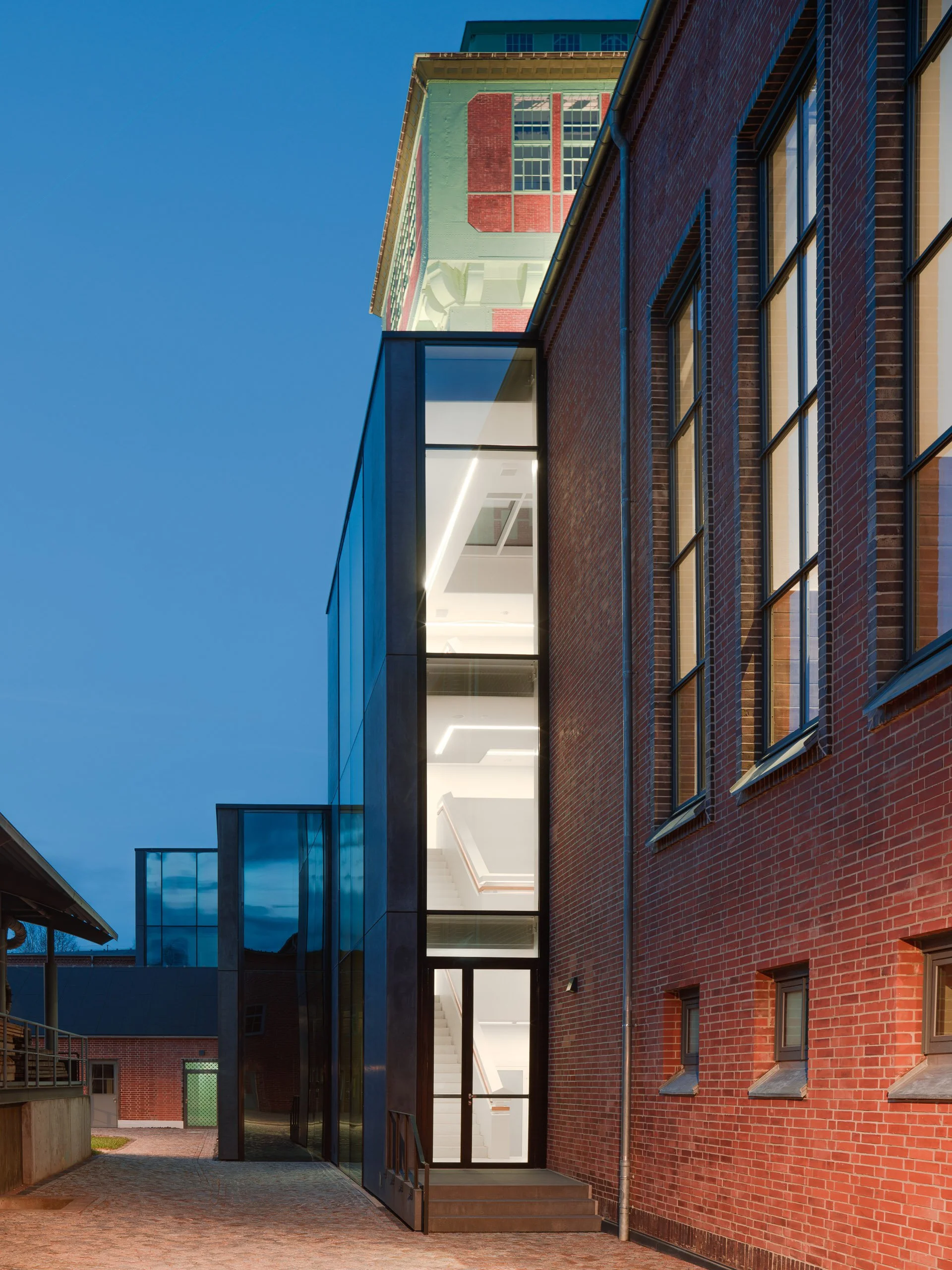
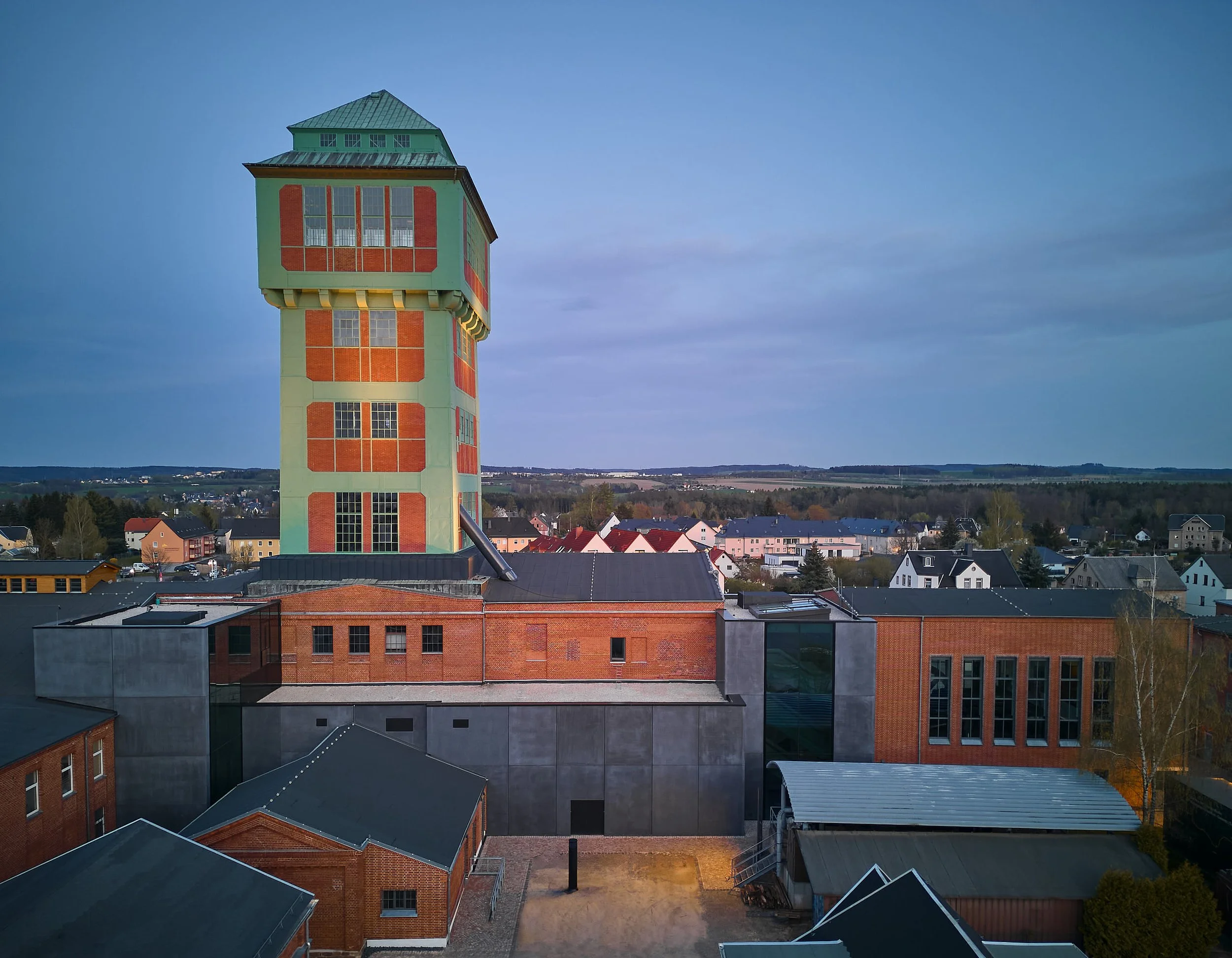
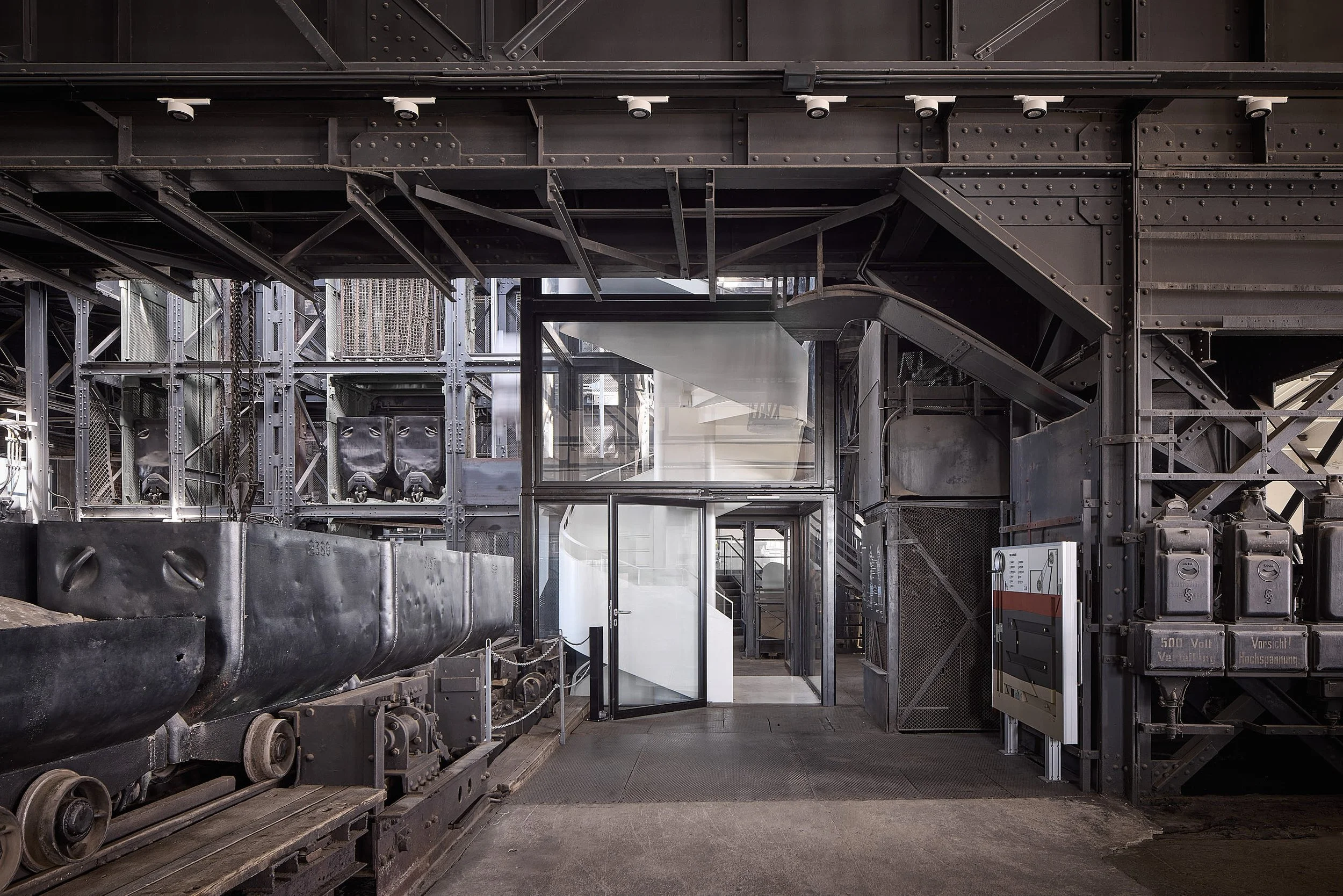
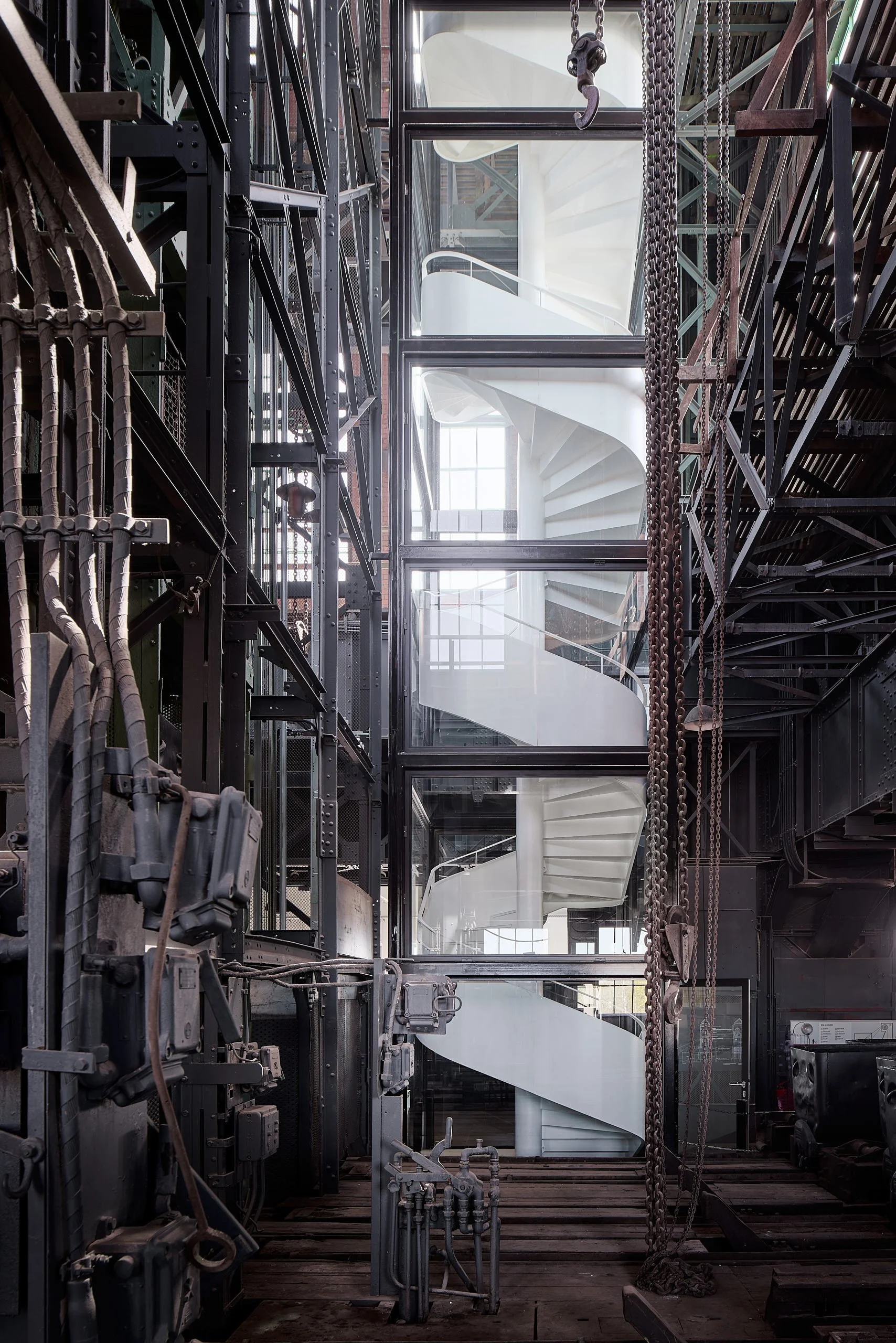
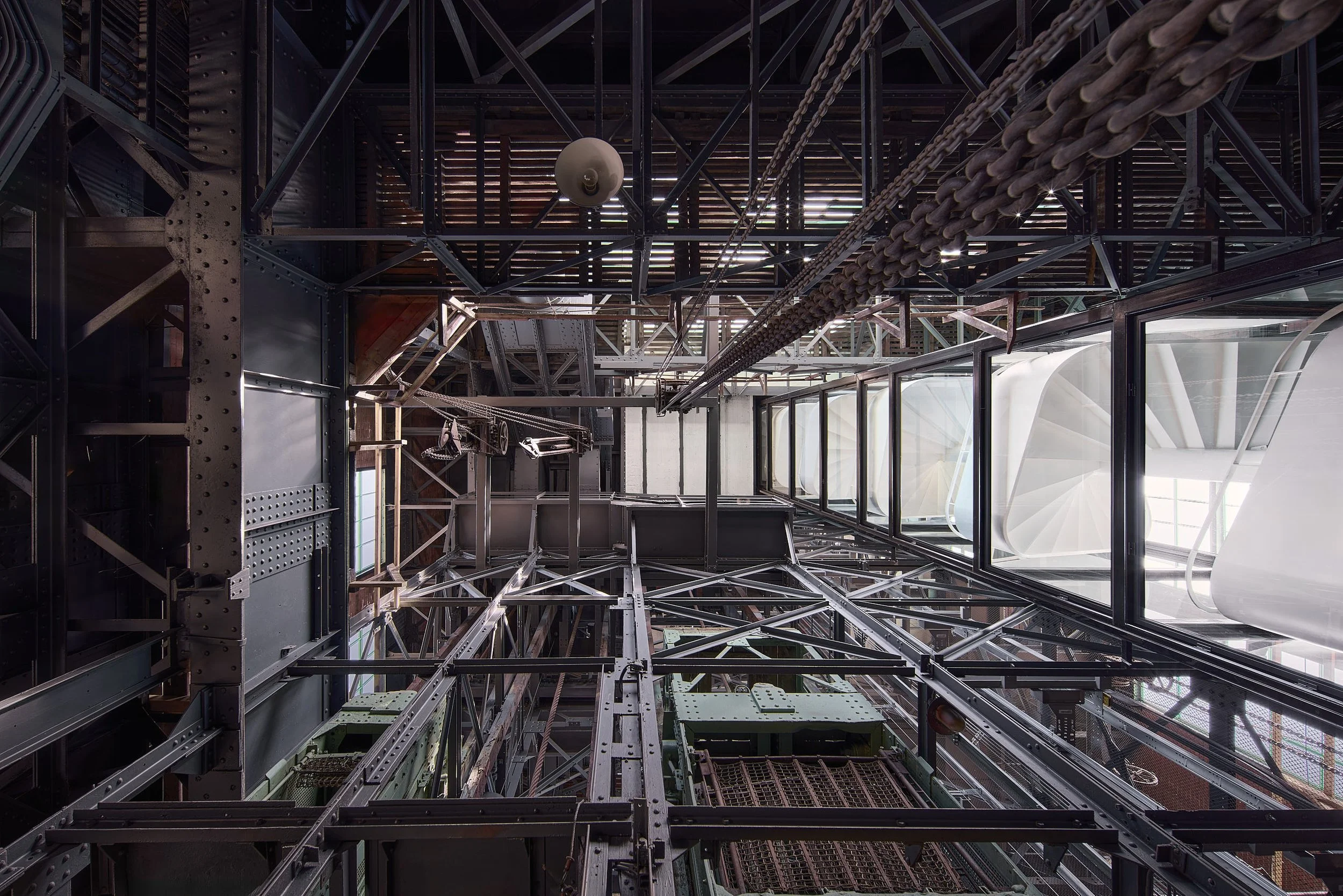
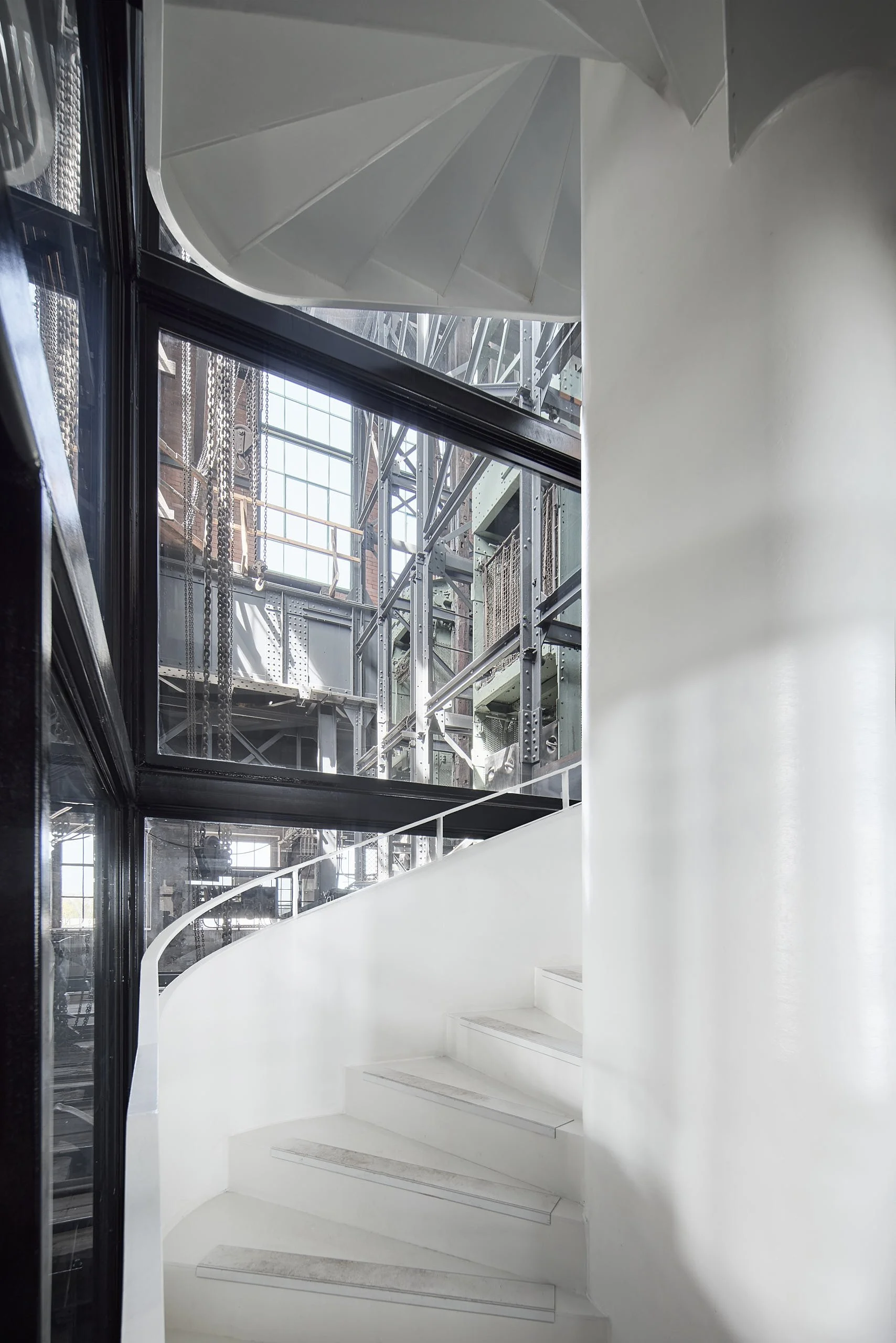
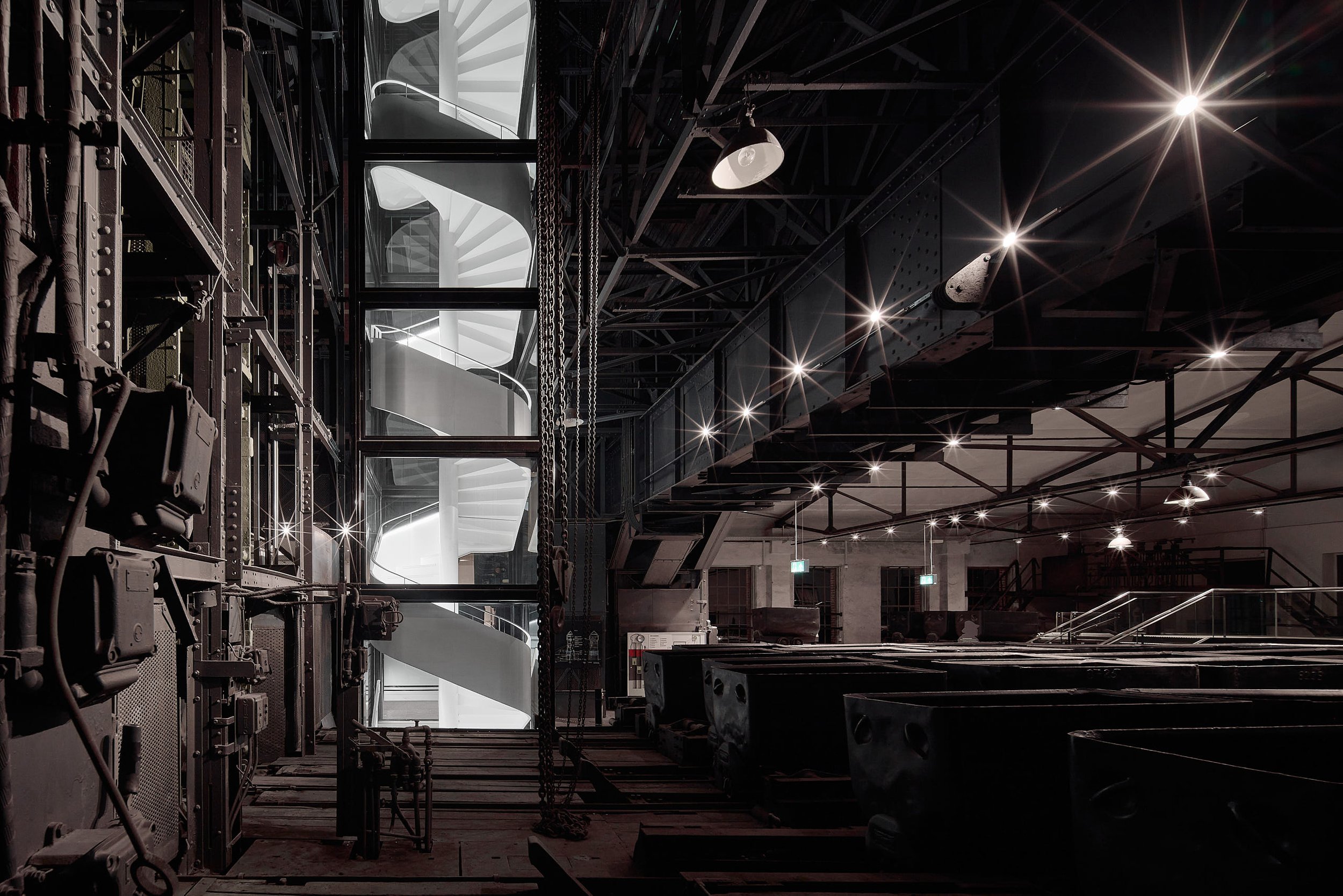
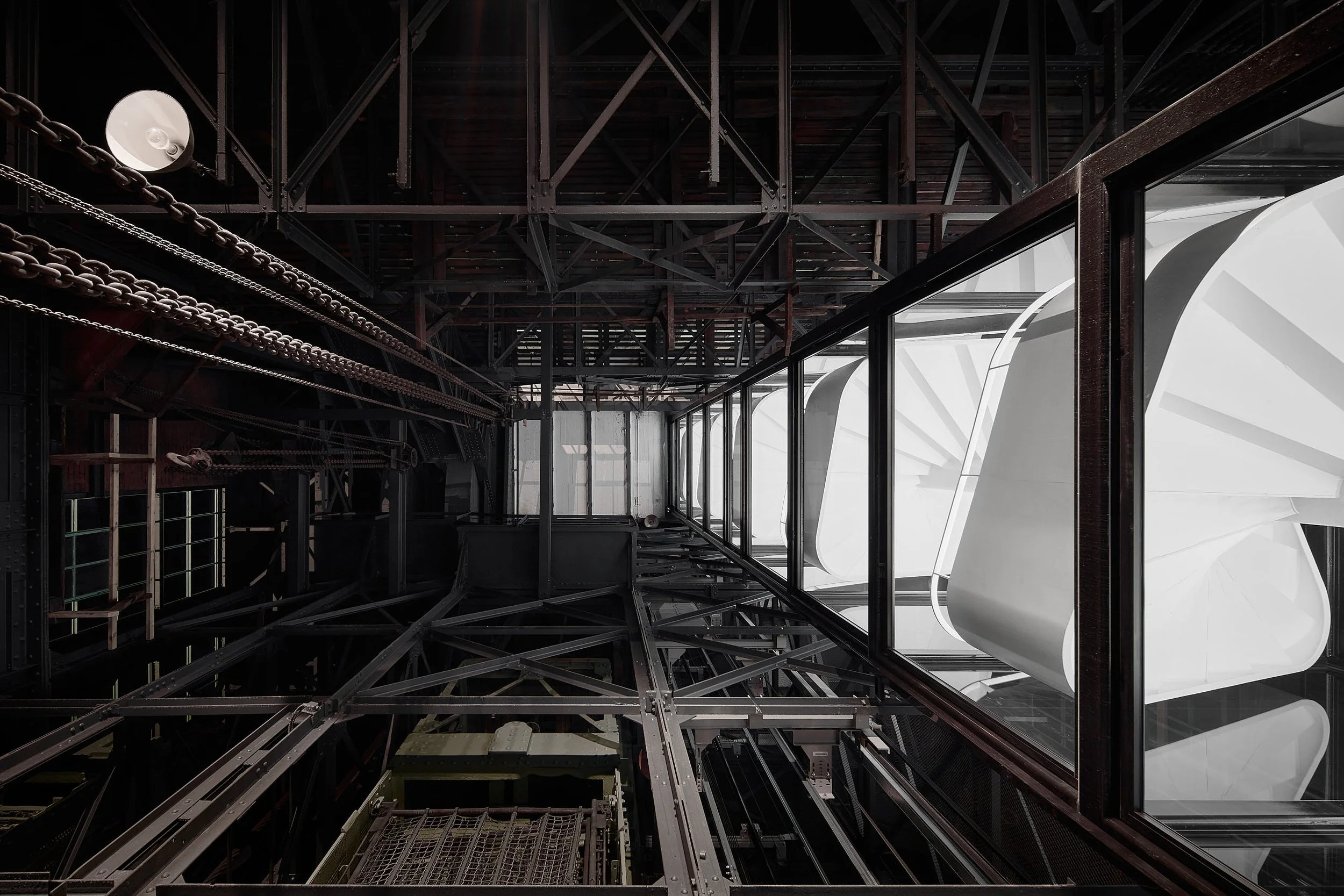
The central focal point of the complex remains the approximately 50-meter-high winding tower, whose steel truss structure has been restored and supplemented with new elements such as a glass emergency staircase and accessible entrances. New connecting structures—including stairwells, landings, and entrance areas—deliberately introduce modern accents and create new visual connections between the historic buildings and the exhibition. 
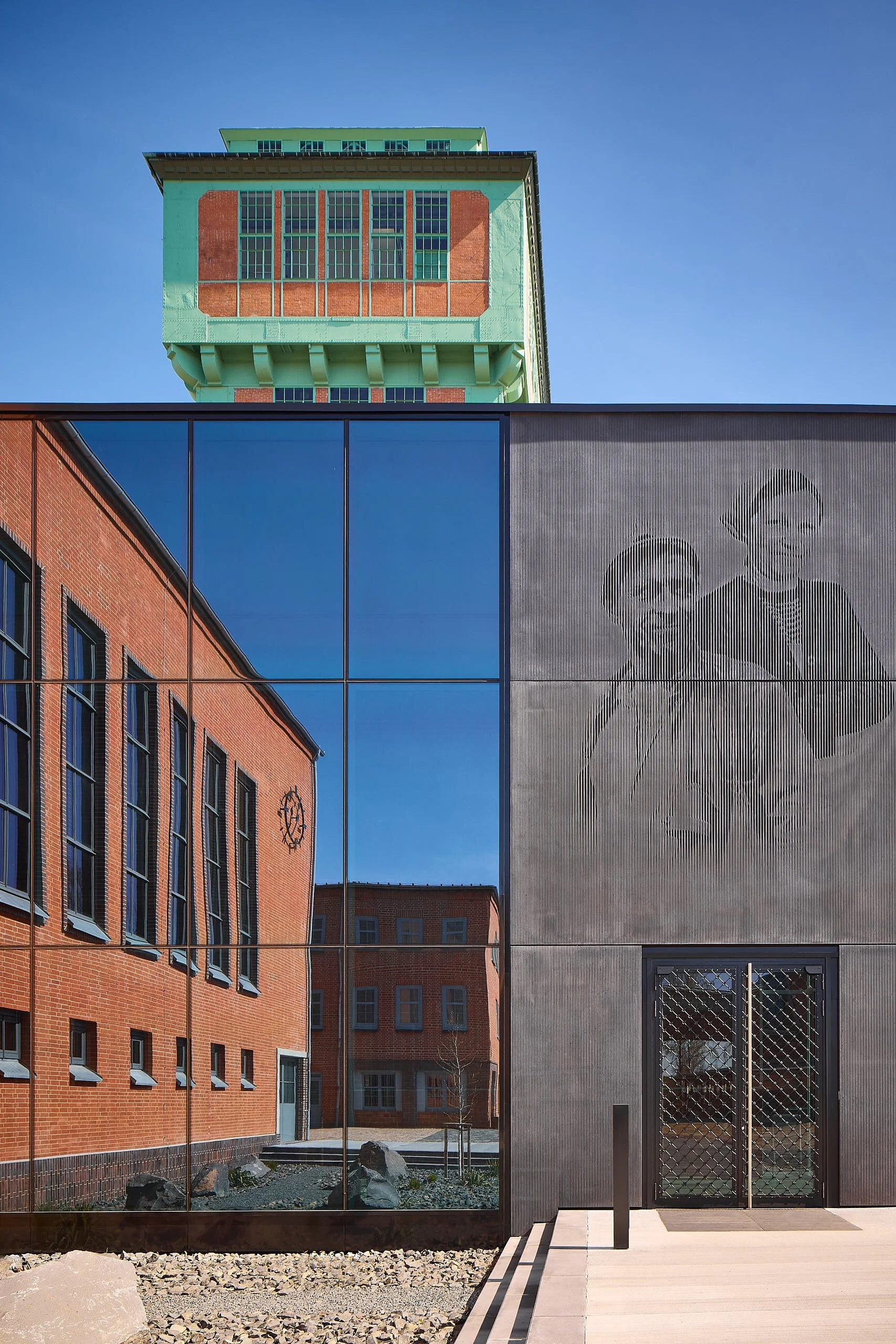
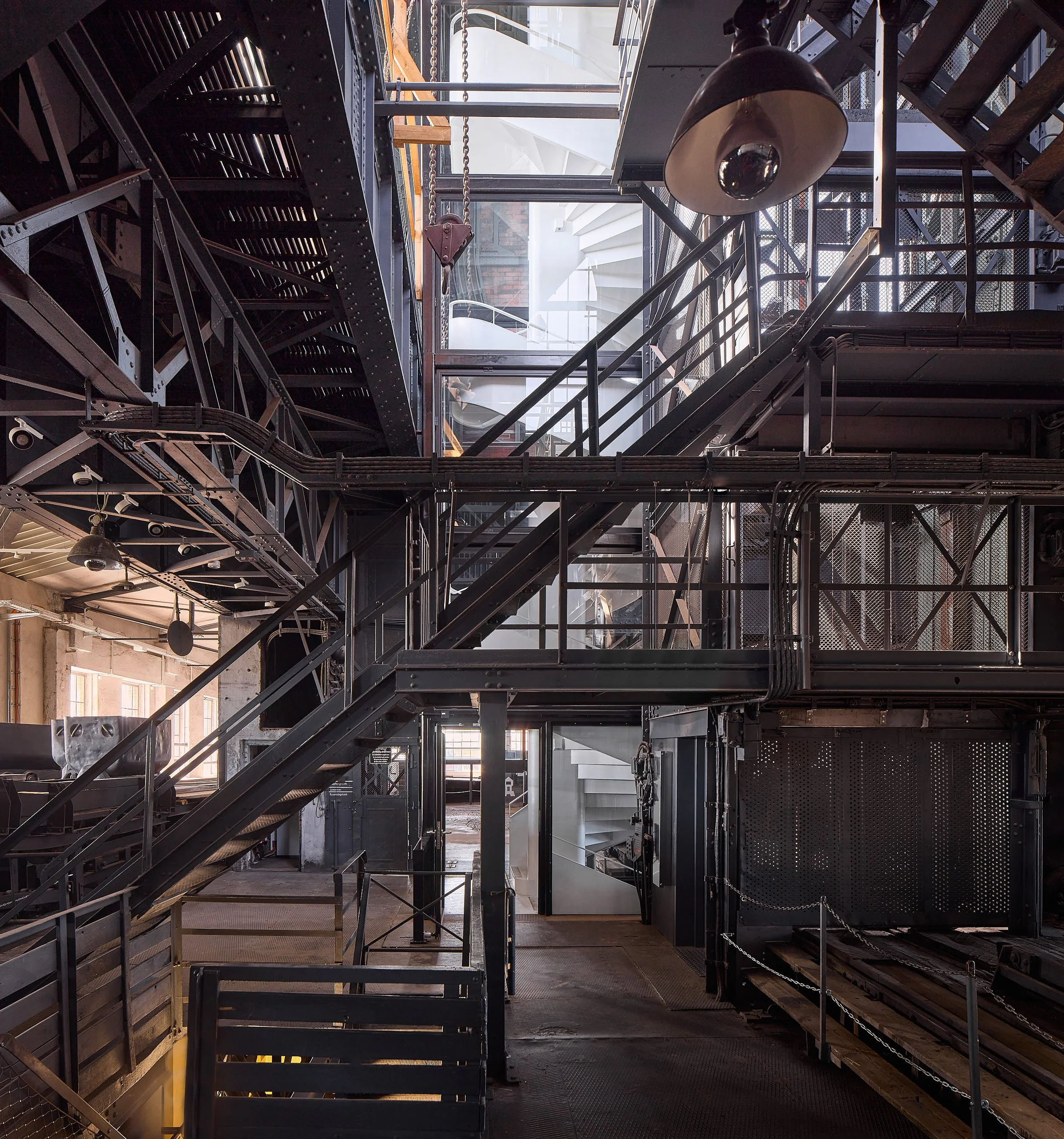
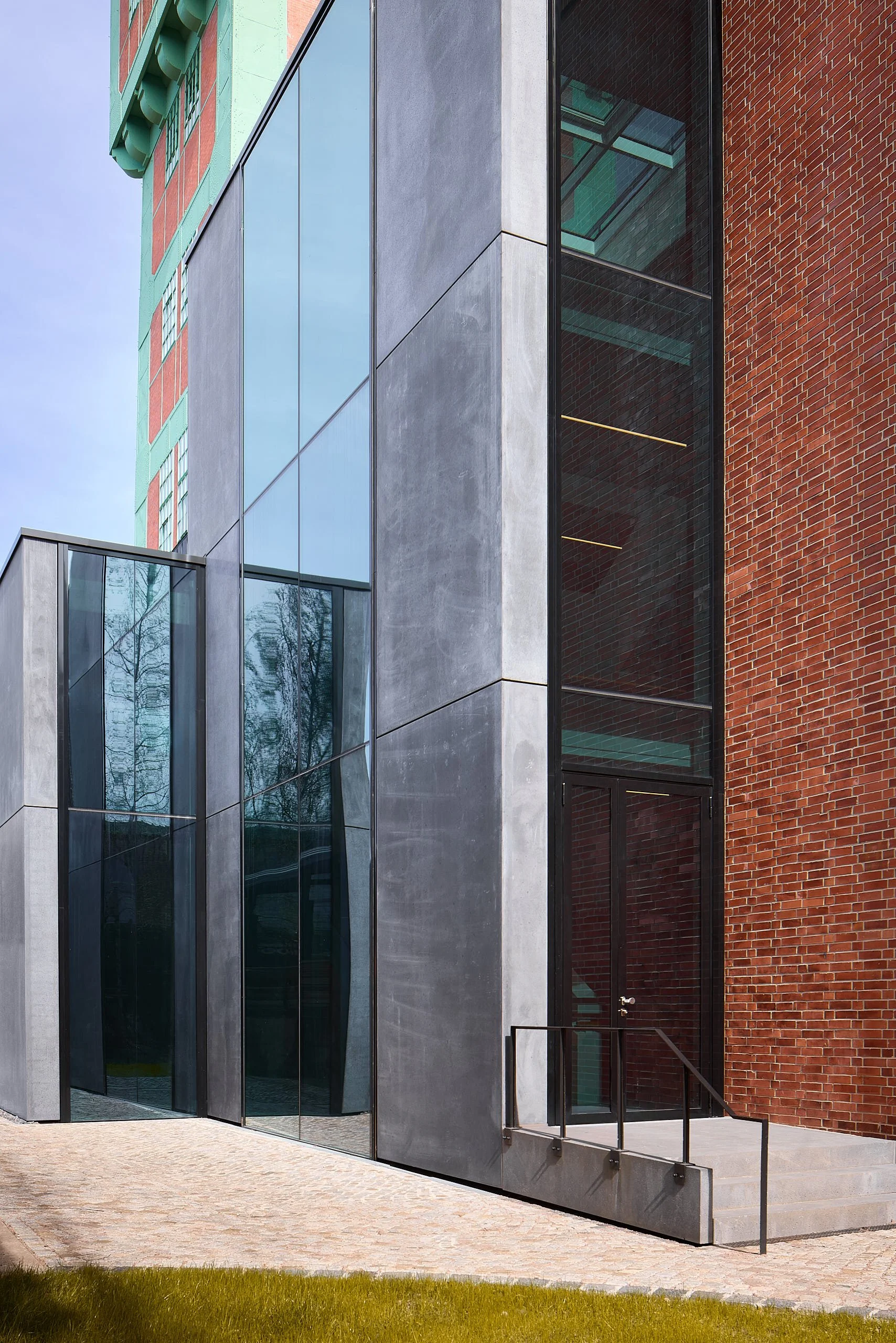
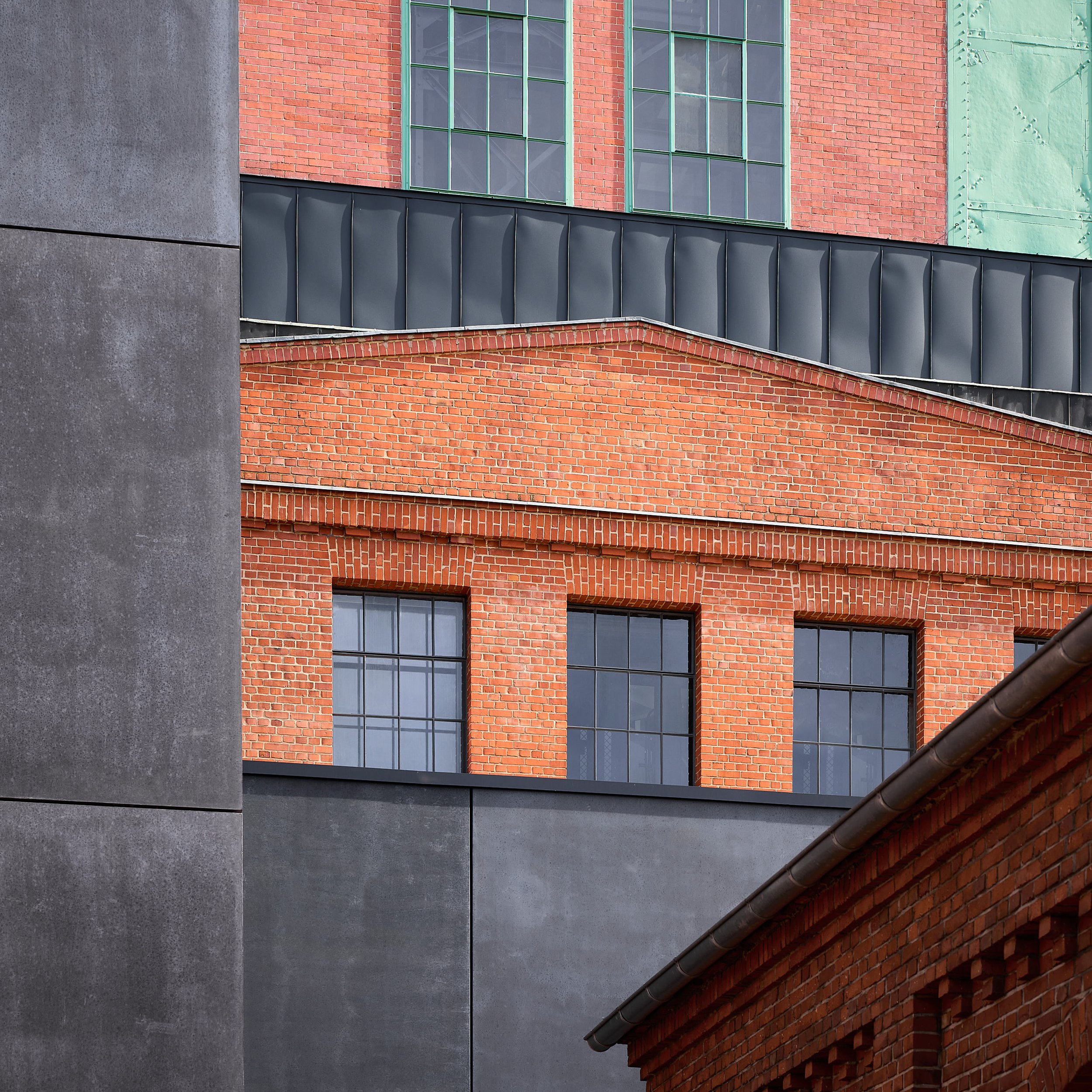
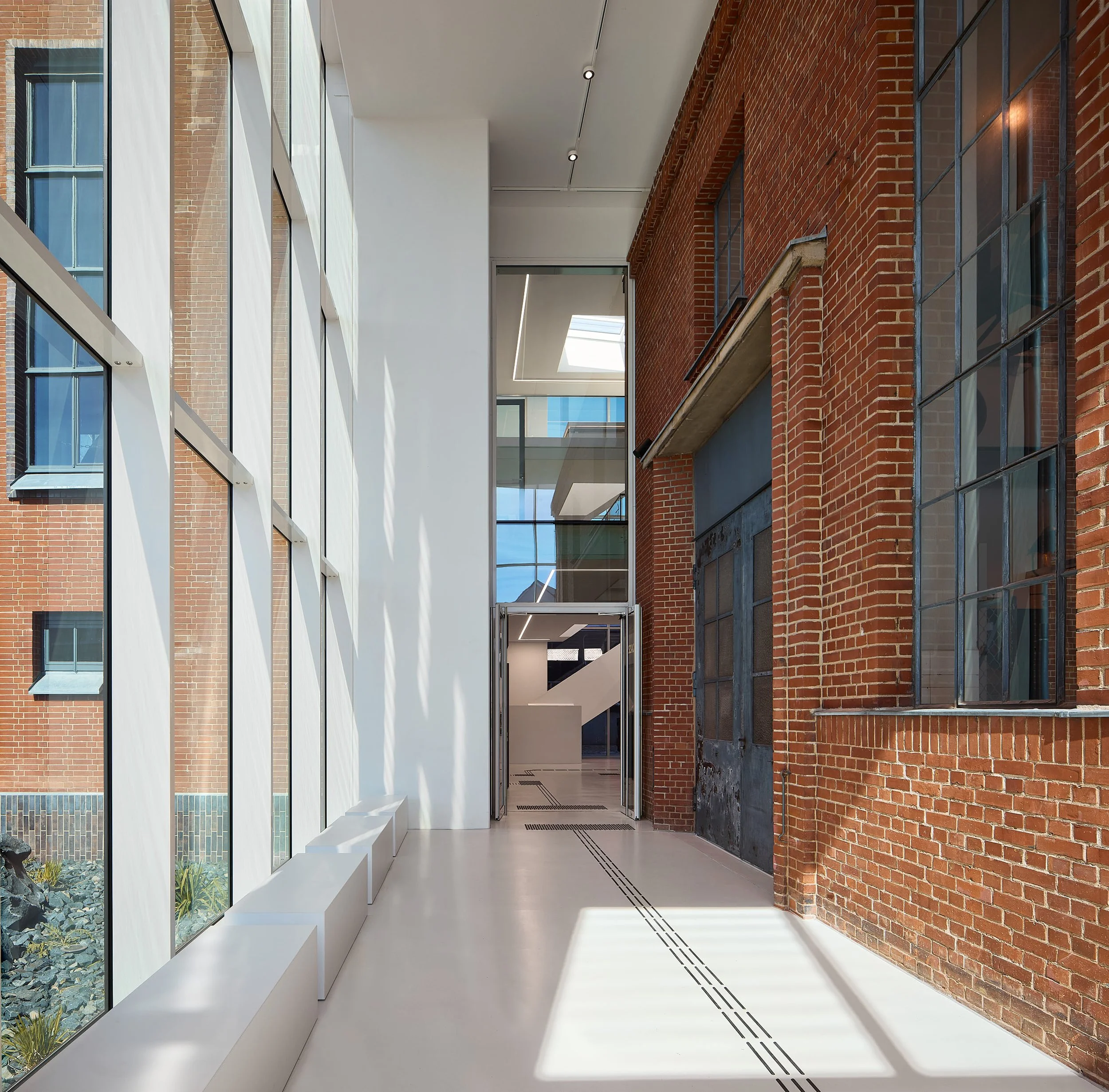
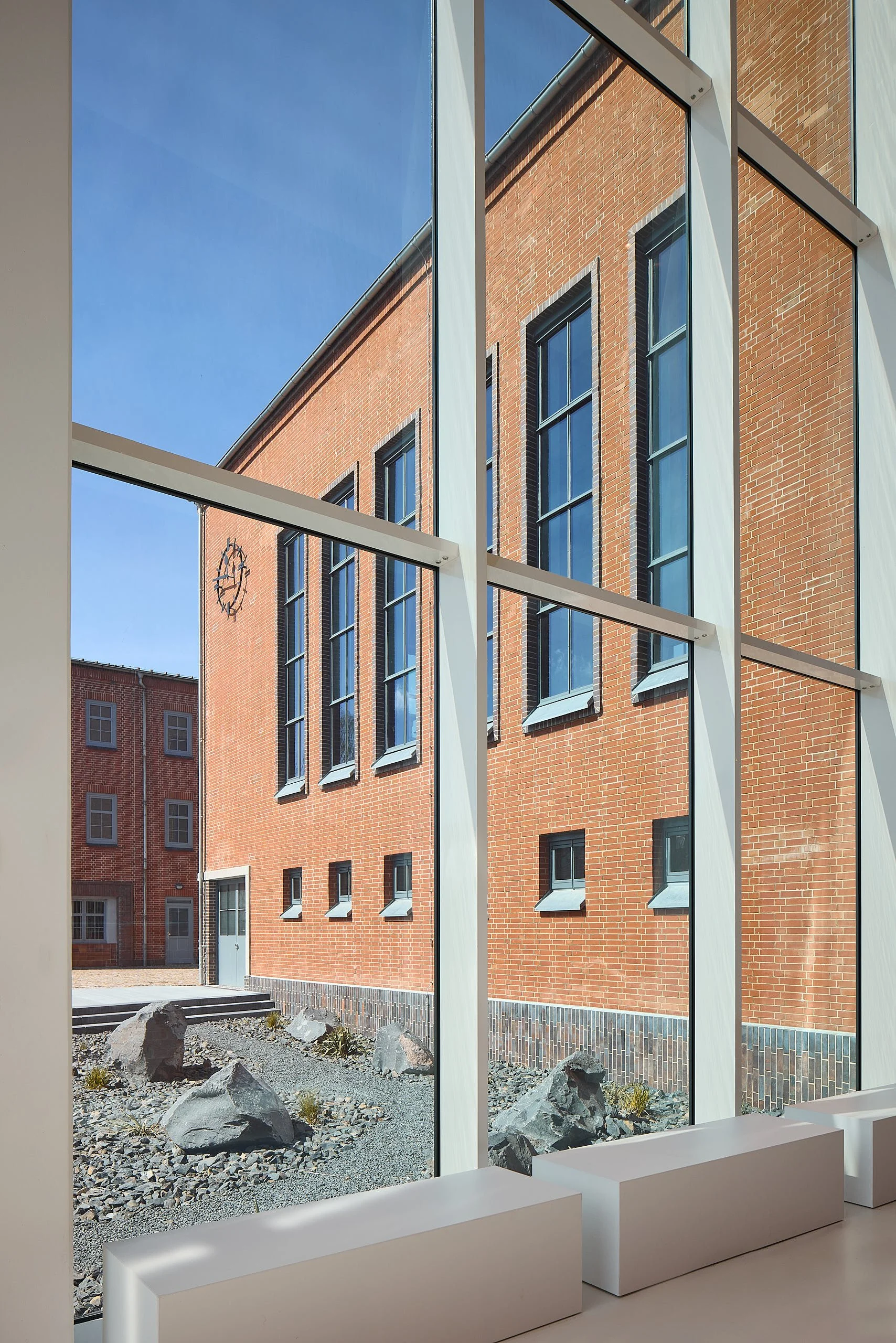
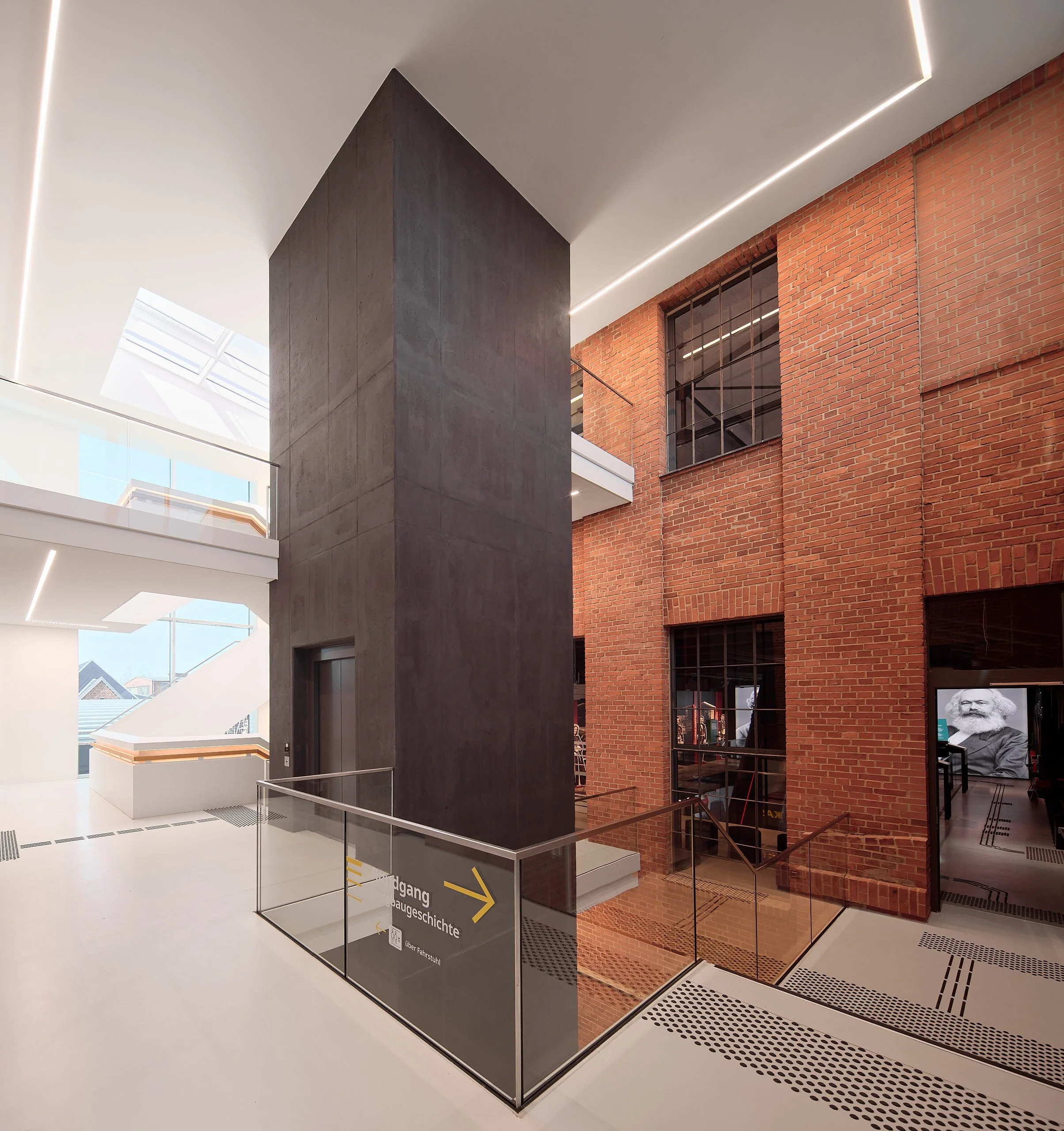
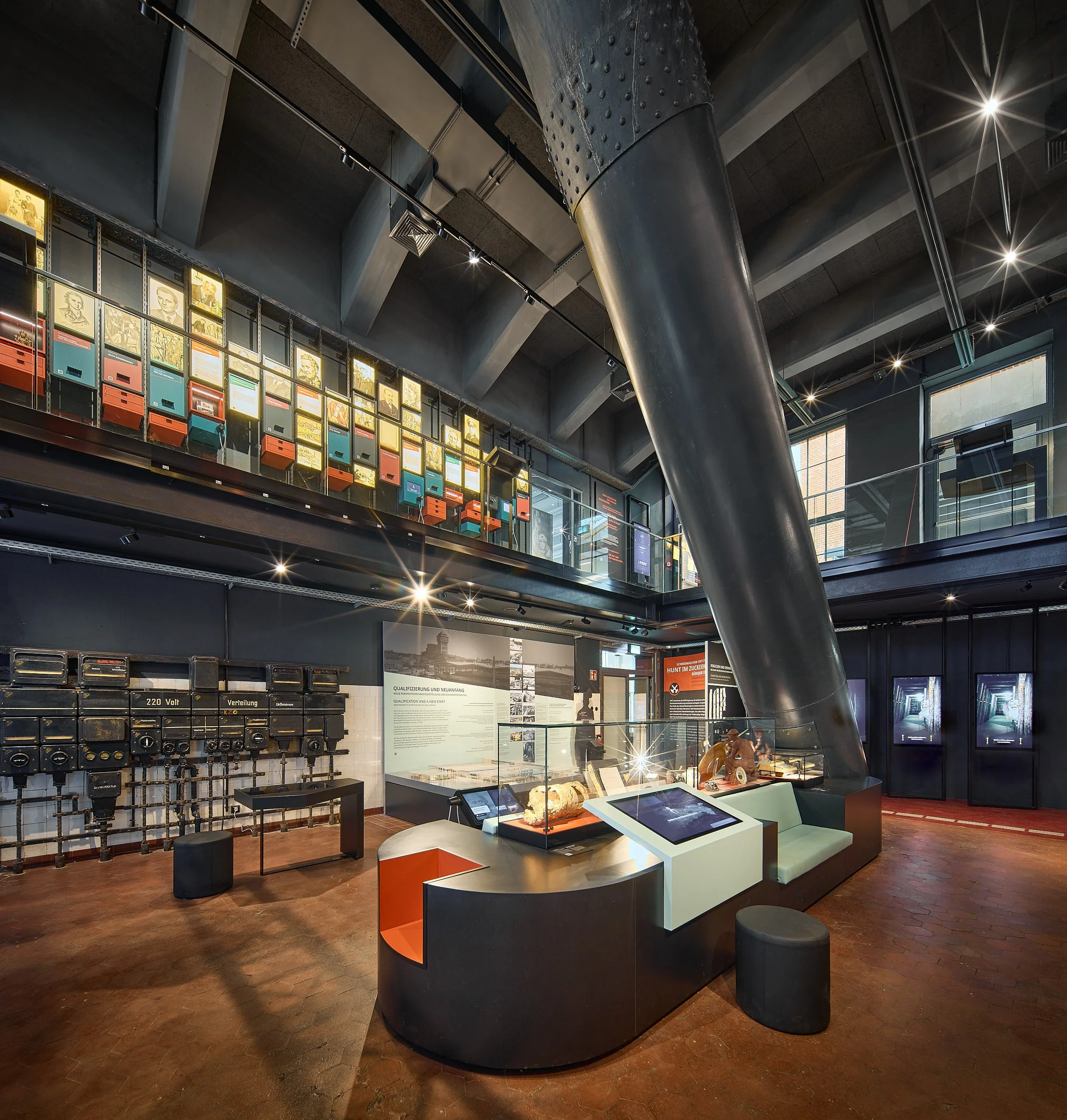
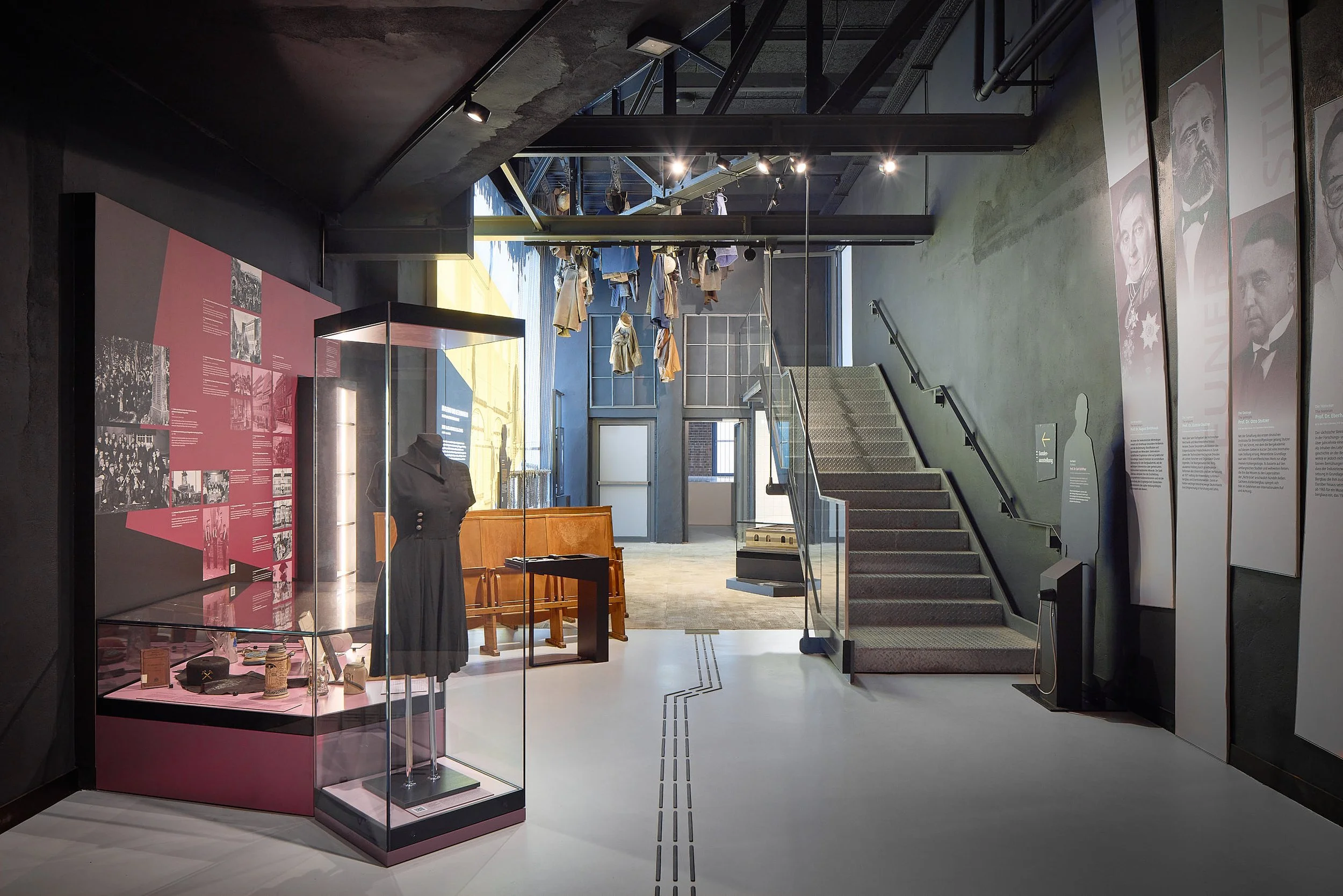
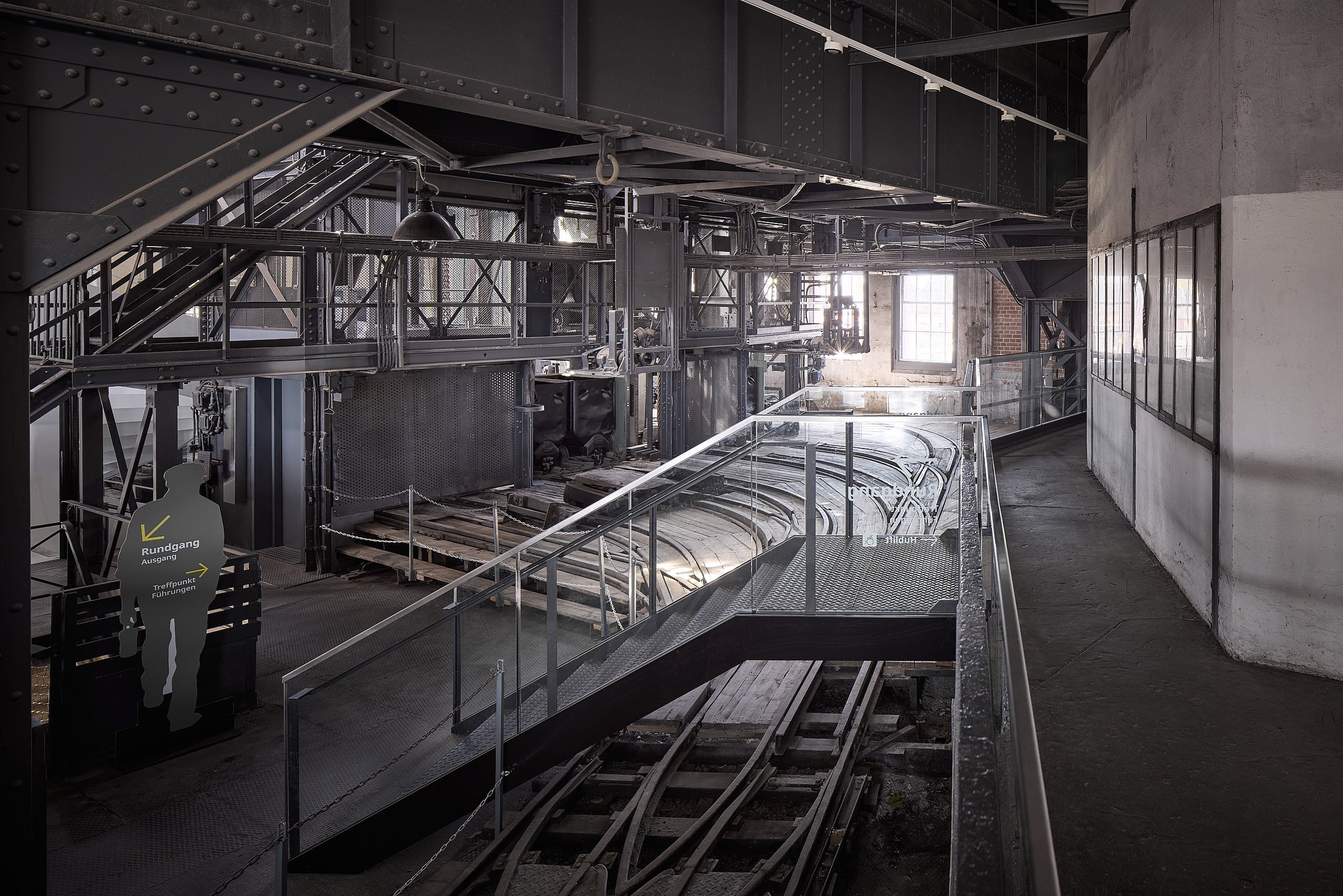
The materials and design language reflect the site’s industrial history: large-scale dark concrete surfaces, glass, and steel evoke the aesthetics of coal mining while clearly highlighting where new architectural interventions complement the historic structure. It is precisely this tension between authentic industrial architecture and striking contemporary additions that shapes the spatial experience of KohleWelt—and forms the basis for the photographic documentation of the project.
“Indocumenting KohleWelt Oelsnitz through photography, it was particularly important to us, in collaboration with Albrecht Voss, to highlight the interplay between new and existing structures, as well as the impact of materials, light, and spatial sequences. Our goal was to effectively convey the unique atmosphere and identity of the site.”
Challenges in Architectural Photography
Timing is always the key factor in project documentation. There is usually only a very short window of time between the completion of a building and the start of regular operations. At the same time, architects, developers, and project partners need their images as quickly as possible so they can showcase the building in competitions, on websites, or in publications.
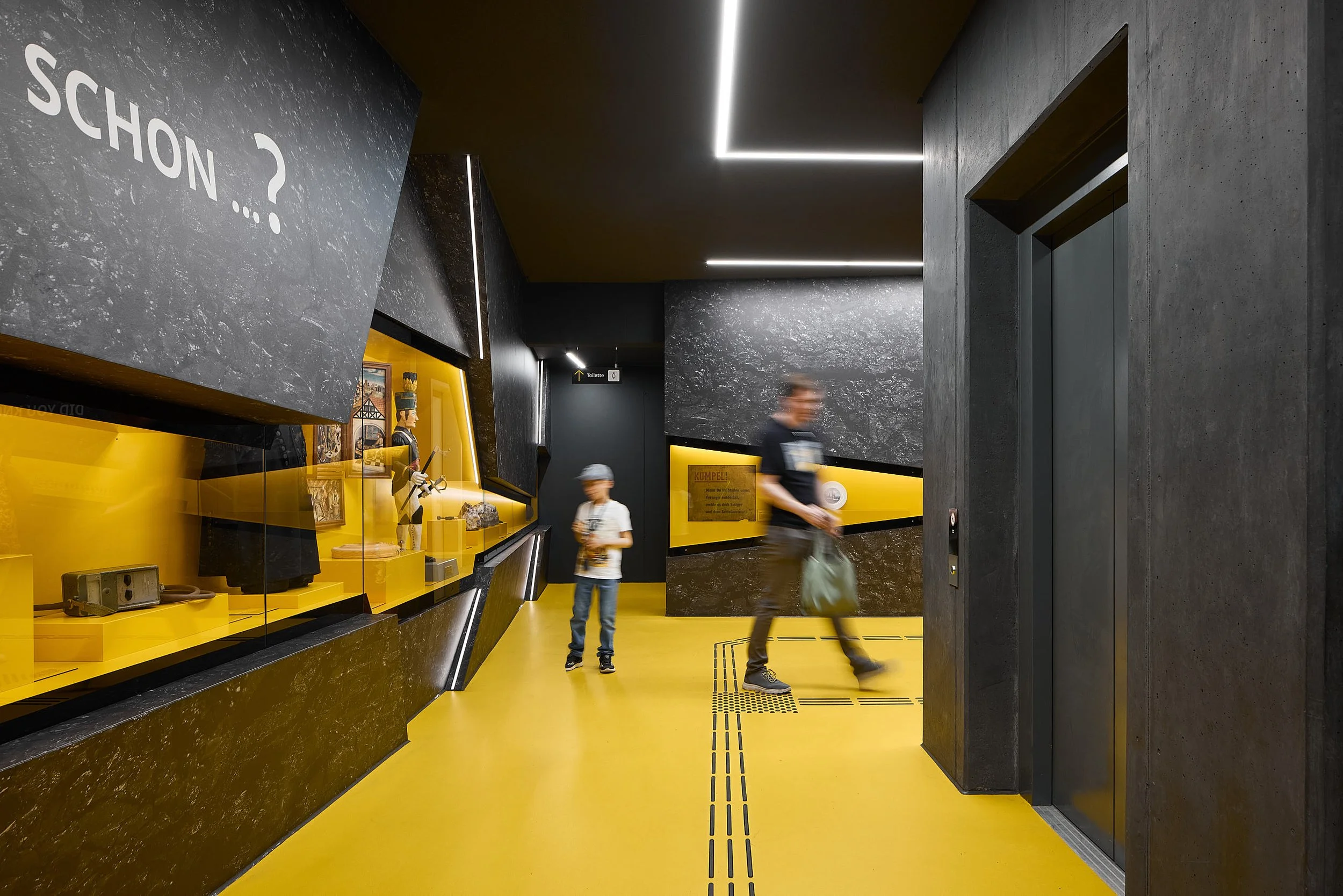
For the KohleWelt exhibition in Oelsnitz, Erzgebirge, we deliberately chose to conduct a photographic documentation during the first week after the exhibition opened. This meant capturing architectural photography while the exhibition was in full swing. In addition to precisely positioning the camera, achieving the right lighting, and composing the frame, we had to wait for the right moment—when the flow of visitors briefly subsided and the architecture came into full view.
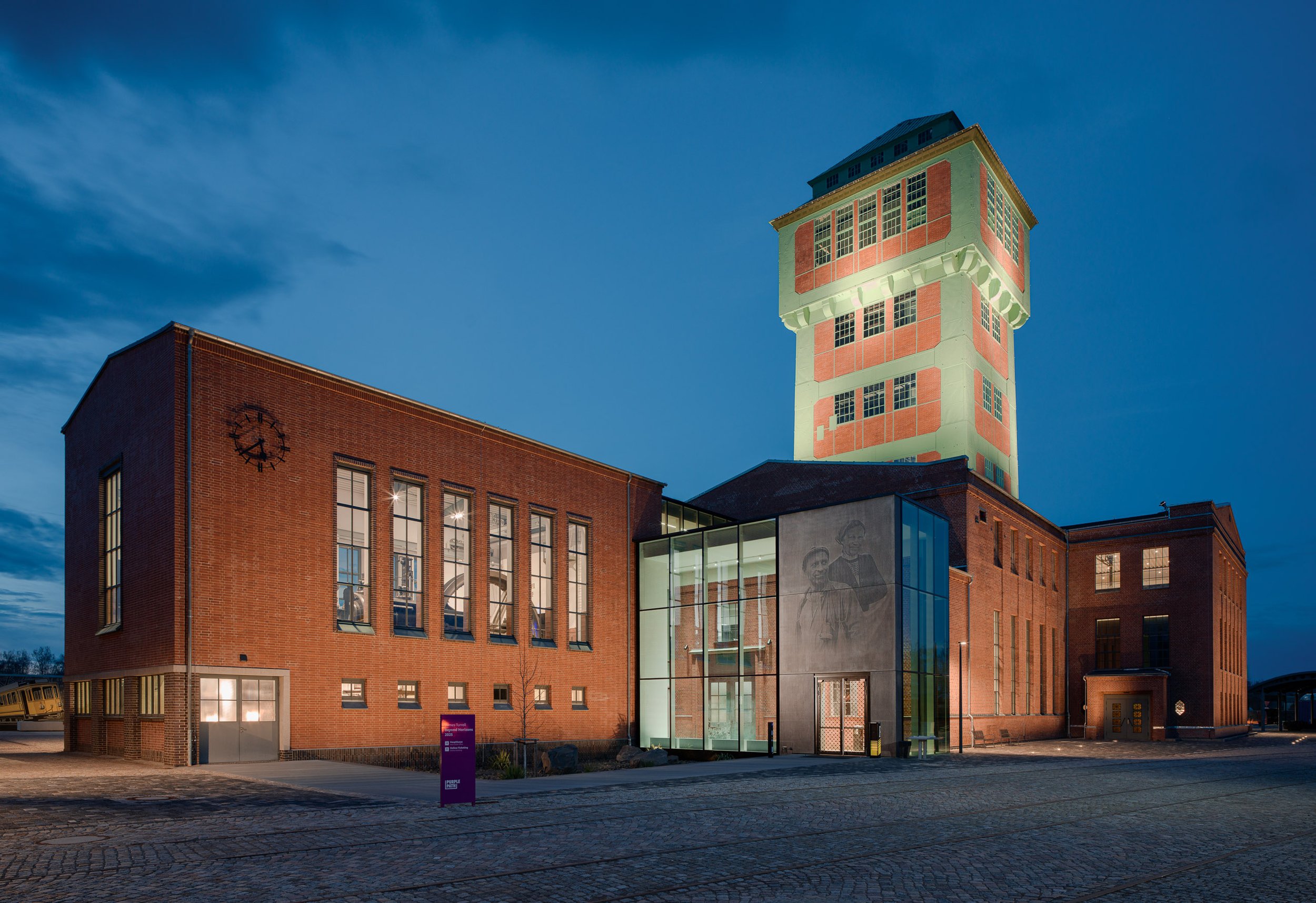
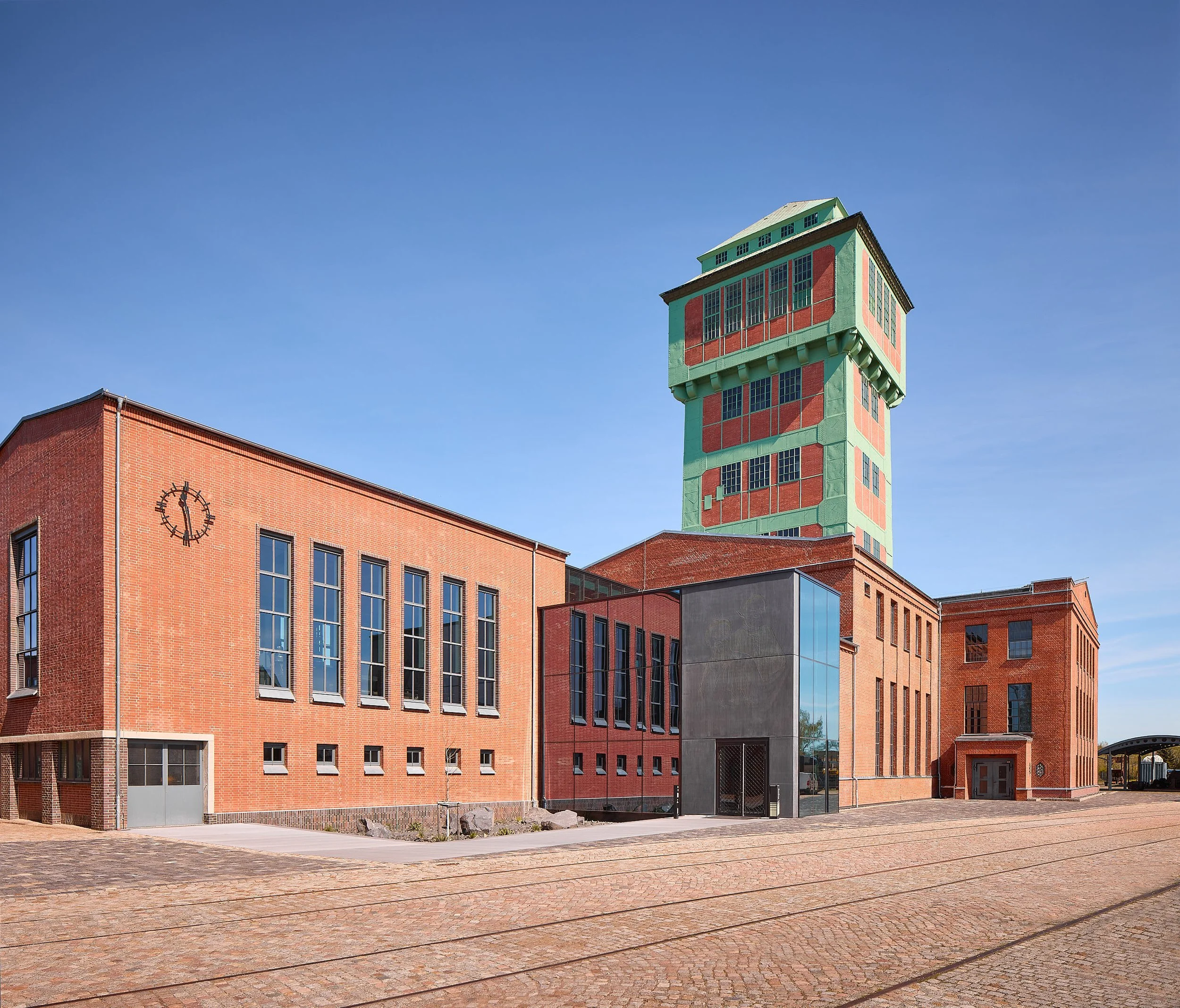
The concrete relief above the entrance area presented another challenge. Its three-dimensional texture only becomes truly visible when the sun is at a very specific angle. That’s why we observed the scene throughout the day and ultimately decided to take the shot just before sunset, when the sun hits the surface at nearly a 90-degree angle, highlighting the texture with striking contrast. For the night shot, we supplemented the available light with a wireless flash to specifically highlight the relief structure of the masonry.
The evening shots also required precise planning. To minimize overtime for the museum staff, all nighttime shots were captured within a single time window. To achieve this, we positioned four cameras around the building, which automatically took pictures at regular intervals. This allowed us to make the most of the brief “blue hour”—the moment when the last of the daylight and the building’s interior lighting reach the same intensity.
These perspectives were supplemented by high-resolution drone footage, which captured additional angles around the museum. At the same time, we used the drone to film various video sequences inside the building and in the surrounding area, which were to be used as the opening video on the general planner’s website.
“Inour collaboration with Albrecht Voss, what matters most to us are his reliability, his ability to meet deadlines, and his deep understanding of architecture. We particularly value his ability to carry out projects independently while maintaining close coordination with us. The consistent visual style across multiple projects is of great importance to our public image.”
Special Considerations for Exhibition Documentation
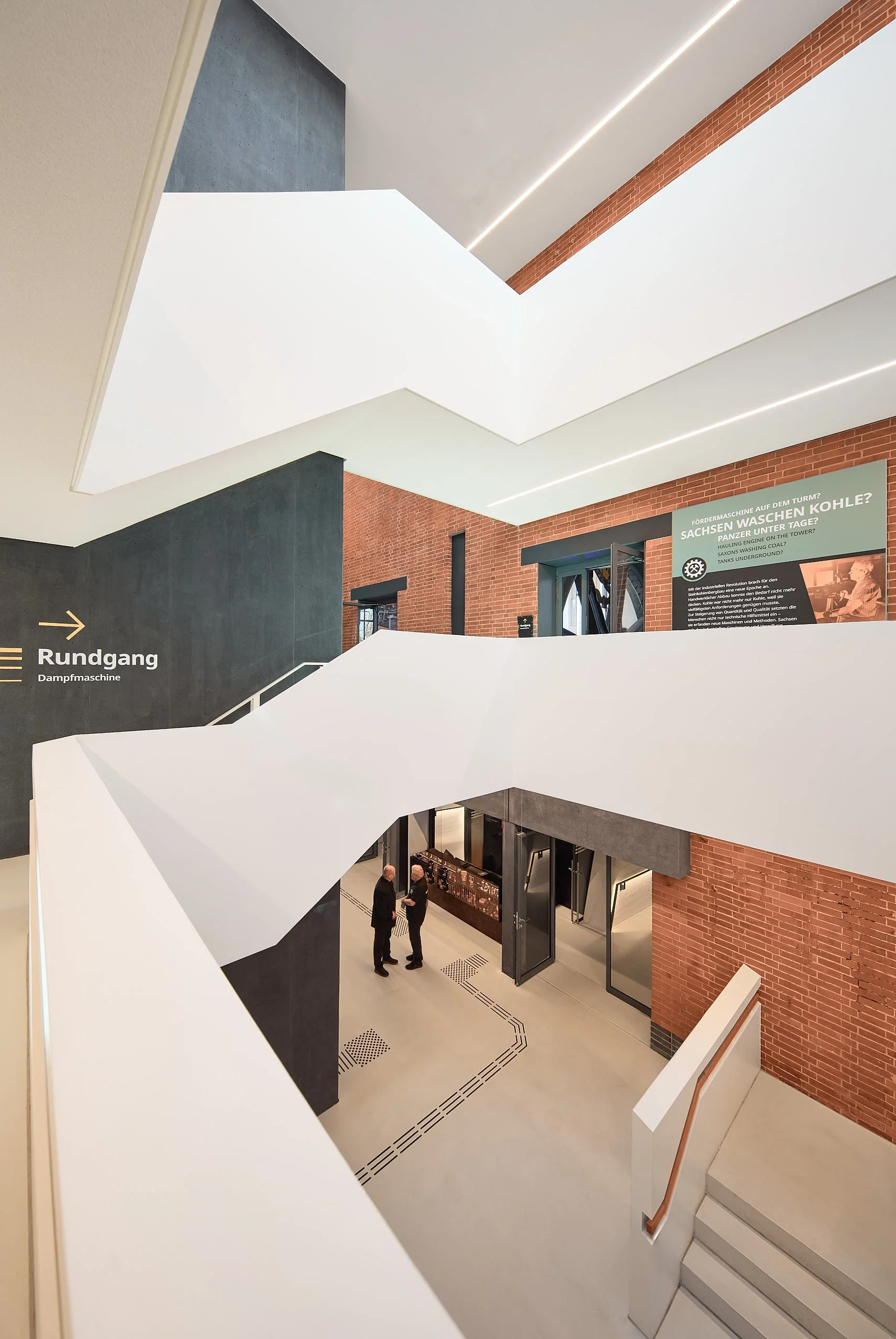
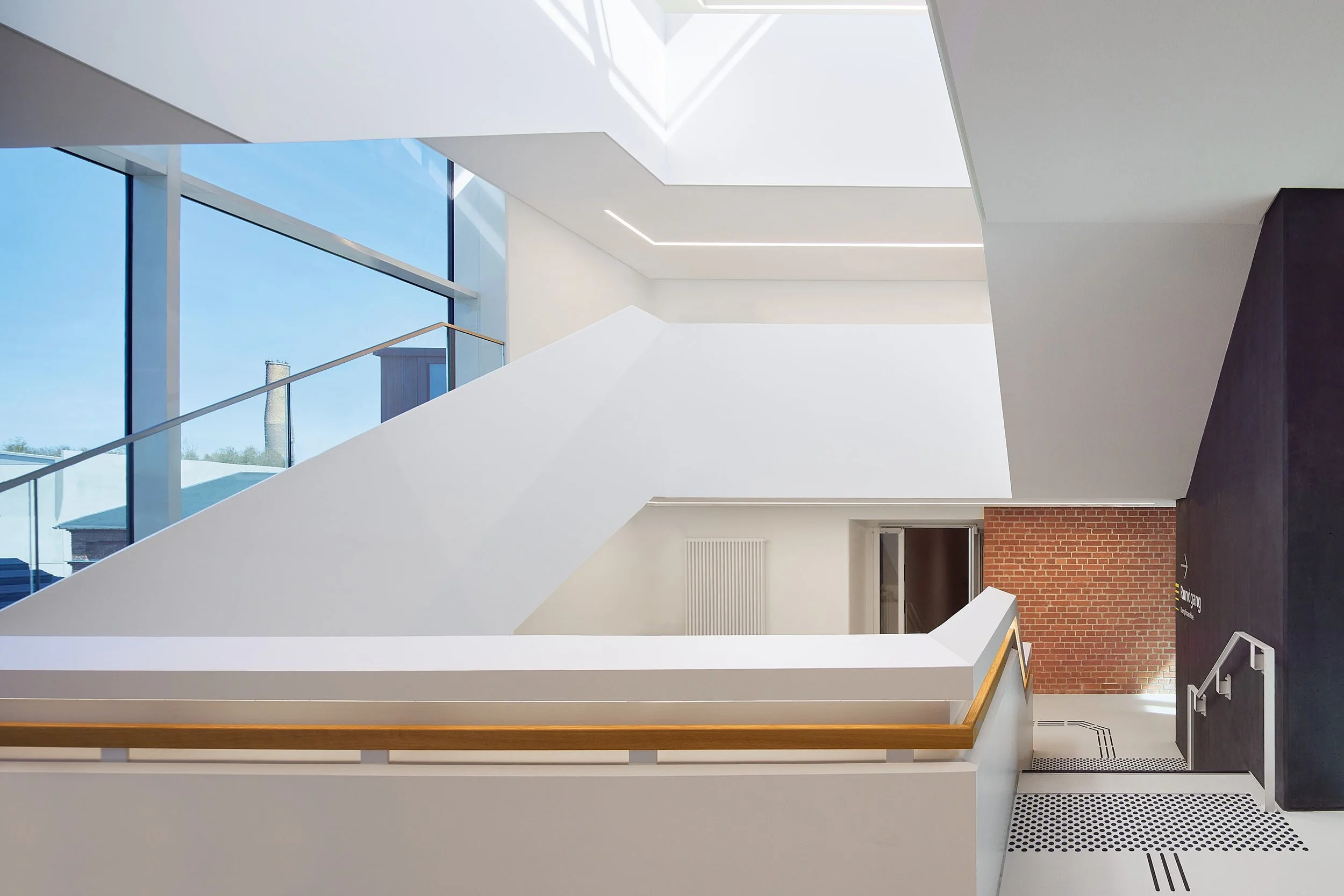
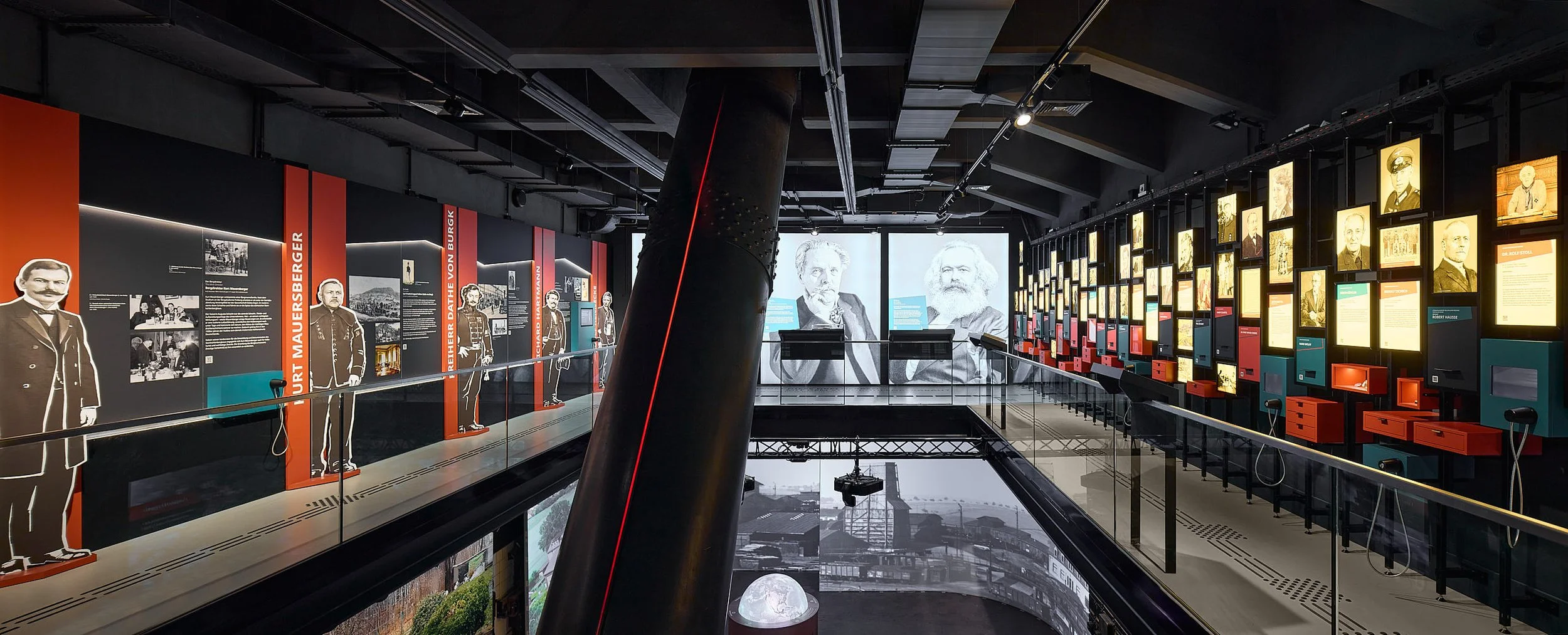
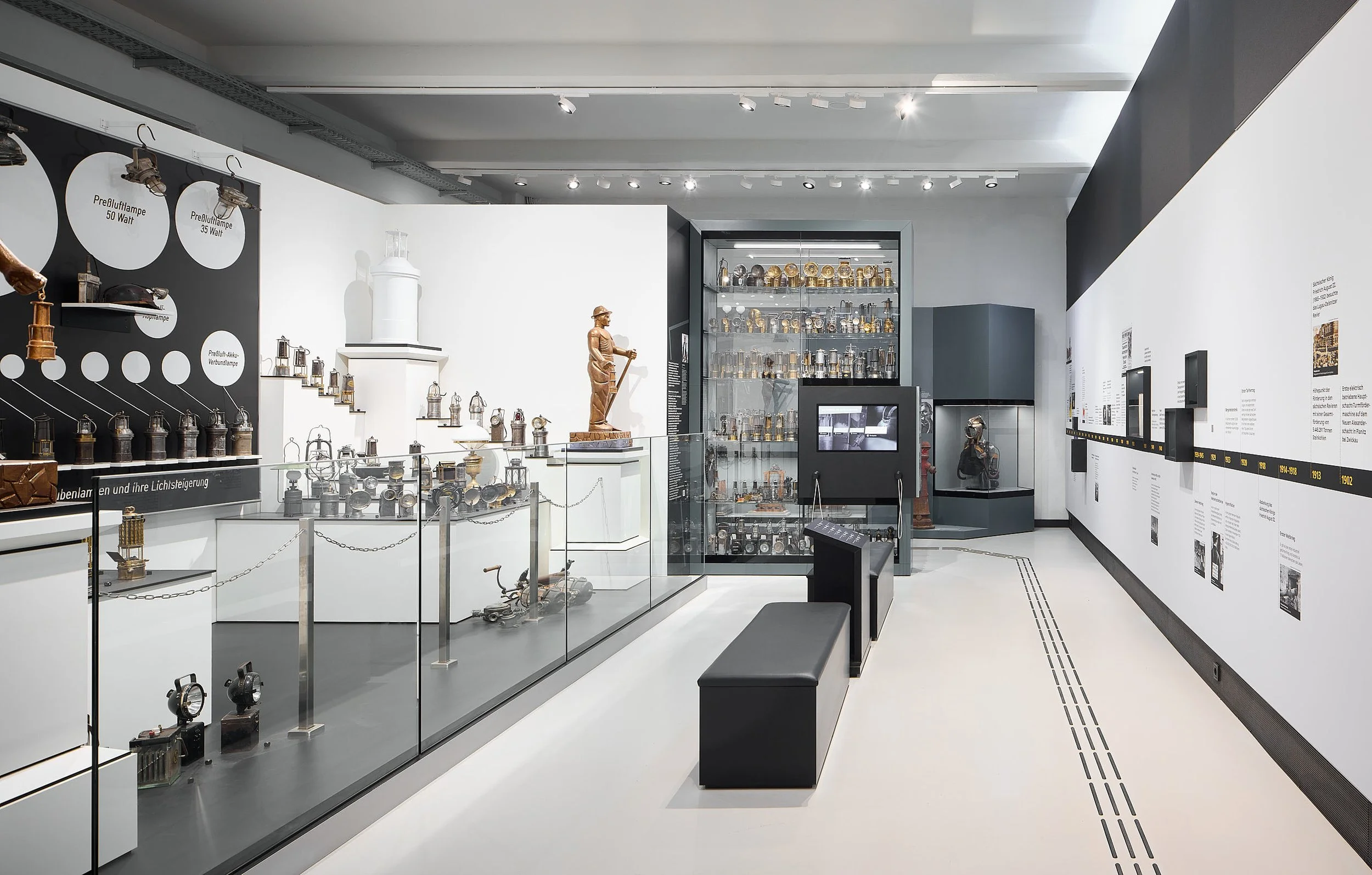
Photographing the interiors of KohleWelt presented a particular challenge. The architecture combines black steel structures, light-colored staircases, and large windows, creating extreme contrasts. To fully capture this dynamic range, modern medium-format technology was used, among other techniques.
Using the Hasselblad X2D II, we were able to capture high-contrast scenes with 100-megapixel resolution and 280 trillion color gradations. This ensures that both the details of the dark steel beams and the textures in the bright window areas remain visible.
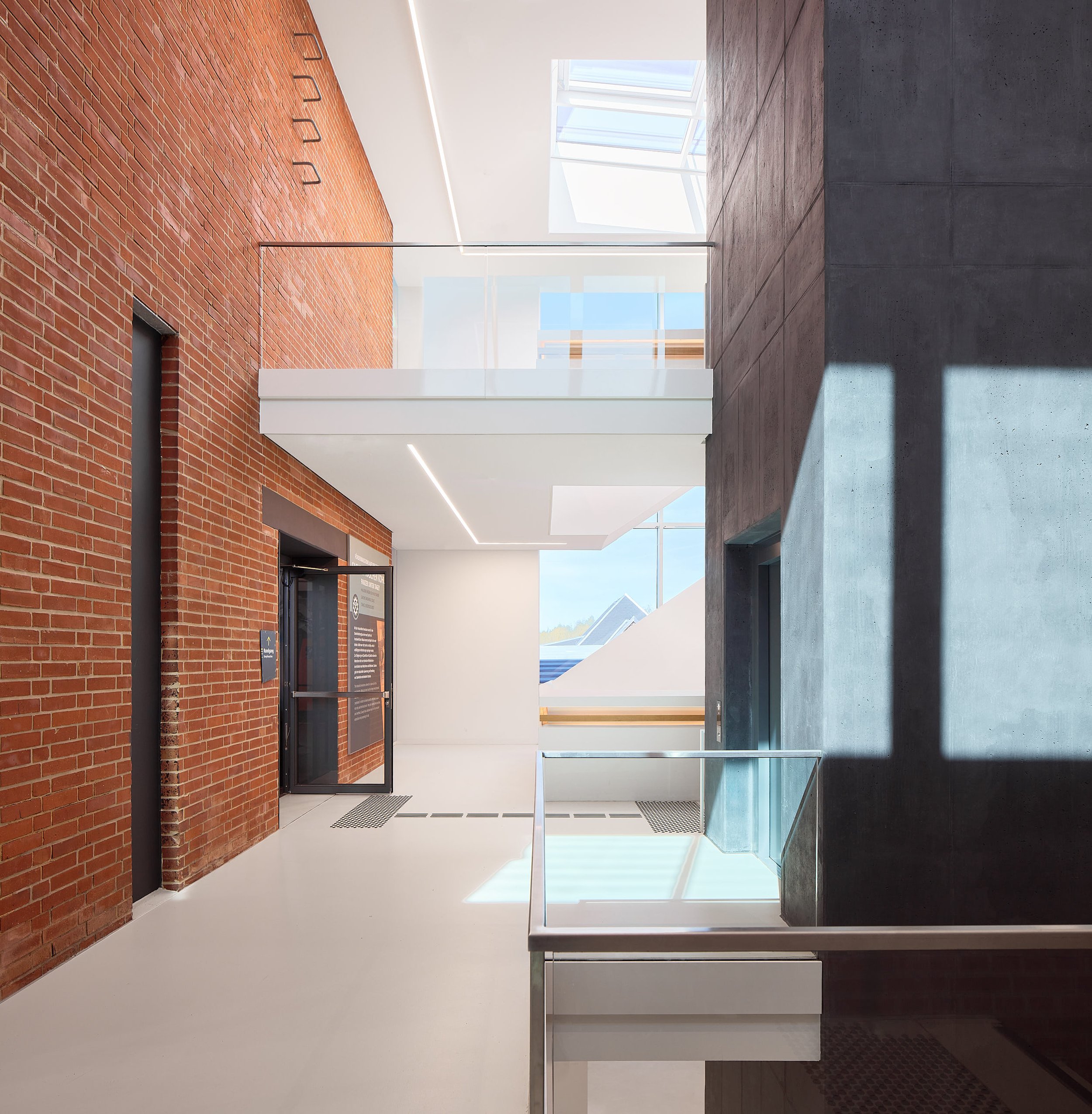
Some exhibition spaces are also more than ten meters high, while their floor areas remain relatively compact. To capture these spaces in their entirety without any perspective distortion, we used shift lenses developed specifically for architectural photography, including the LAOWA 15mm Zero-D Shift. Multiple individual shots were then stitched together to form vertical panoramas. This creates a field of view spanning nearly 180 degrees—yet with orthogonal lines and without the typical distortions of a fisheye lens.
Color grading also played an important role in the post-production process. The goal was to render the gray concrete and steel surfaces in a neutral way, free of color casts, while simultaneously emphasizing the characteristic red of the brick facades. The result is imagery that appears objective and precise on the one hand, yet powerfully conveys the materiality and atmosphere of the location on the other.
“Thephotographs taken by Albrecht Voss are a key communication tool for us. They bring design concepts and spatial qualities to life and serve as the foundation for competitions, publications, and the presentation of our projects to clients and partners.”
Conclusion
In just 16 hours of shooting, we were able to produce over 50 photographs and a video trailer for IPROconsult—all while the museum remained open to the public. The result is a comprehensive project documentation that offers the general planner a wide range of applications: The images can be used for architectural competitions, publications, digital presentations, and future project acquisitions. For me, this project demonstrates once again that good architectural photography depends not only on the right light or the perfect perspective—but above all on planning, patience, and the ability to translate complex spaces into clear images.
Equipment
Camera 1
Camera 2
Lens 1
Lens 2
Lens 3
Tripod
Drone 1
Drone 2
Software
Canon R5
Canon TS-E 24mm f/3.5L II
LAOWA 15mm f/4.5 Zero-D Shift
